The Unfinished Church of San Michele on Monte Barro
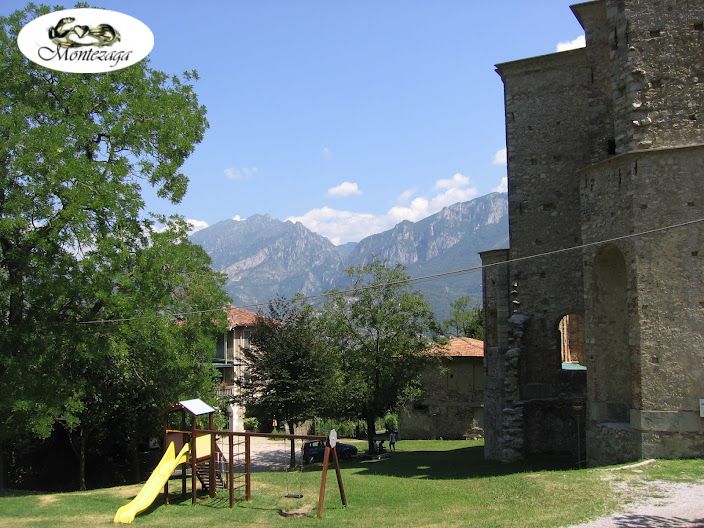
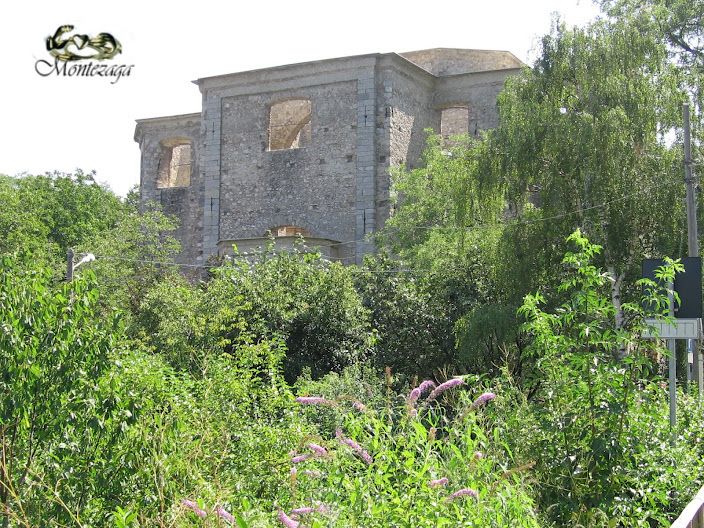 Walking along the paths that cross Monte Barro, the well-known peak overlooking Lake Lecco, the last thing you would expect is to find yourself suddenly facing an imposing church hidden in the vegetation. It looks almost like a mirage, but at the locality of San Michele the original church dedicated to the Archangel is very real, and its origins are very ancient, probably dating back to the Lombard period.
Construction of the present church, which was never finished, began in 1718 and ended in 1752 with a temporary roof that collapsed in 1932. With the conservation work promoted by the Monte Barro Park and completed in 2008, the grand building was rescued from a decay that had seemed unstoppable and returned to the community as a space of extraordinary atmosphere in the heart of the park's natural setting, now used for cultural events.
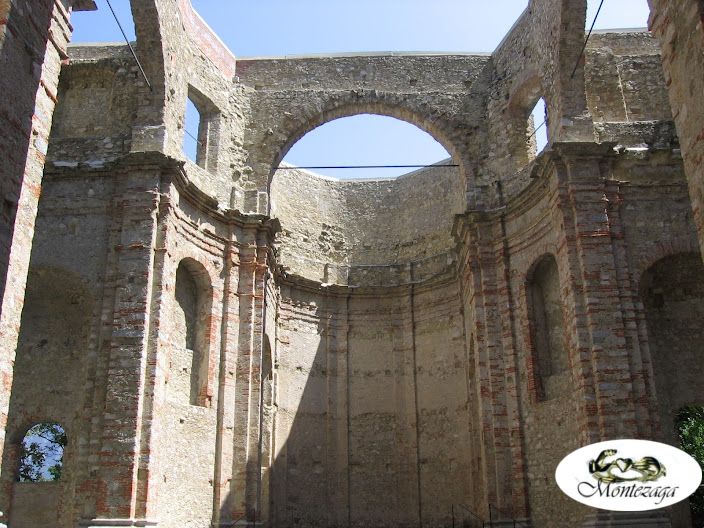
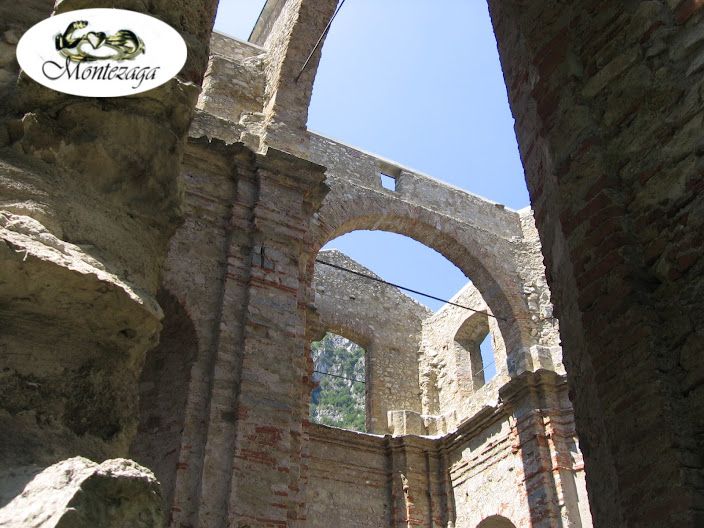
History tells us that between 756 and 774 Desiderius, the last king of the Lombards, was also king of Italy. He is credited with building the Church of San Michele, a saint for whom the Lombards had a special devotion, venerating him as the weigher of souls. The Como historian Paolo Giovio, in his 1537 work Descriptio Larii lacus, records the foundation of the Church of San Michele on Monte Barro by Desiderius. The Church of San Michele first appears in a document of 1146 in which Archbishop Oberto da Pirovano assigned to the monastery of San Dionigi the Church of San Michele di Pescate and its properties. In a document of 1147 Pope Eugene III lists the Church of San Michele di Pescate among the possessions of the monks of San Dionigi and grants the friars permission to build a monastery there. In 1290 Goffredo da Bussero, a medieval Milanese priest and writer, records in the Liber Notitiæ Sanctorum Mediolani that the Church of San Michele was under the jurisdiction of Pescate, in the pieve of Garlate. In the following century Pescate was annexed to the pieve of Lecco, and the church of San Michele therefore passed under the jurisdiction of the Lecco Chapter. The records of Cardinal Federico Borromeo's pastoral visit of 1608 state that the Oratory of San Michele is very old, faces east, has a single nave of about 25 square metres and an immense height, because it is completely open to the sky; its façade has a doorway without doors, so it is open to all, and the altar is built of masonry and lacks any ornament. The oratory is completely dilapidated. The same document orders that it be restored as soon as possible and states that every year, on the first day of the Rogations, the Provost goes there in procession with the Chapter and the clergy, attended by a large number of the faithful.
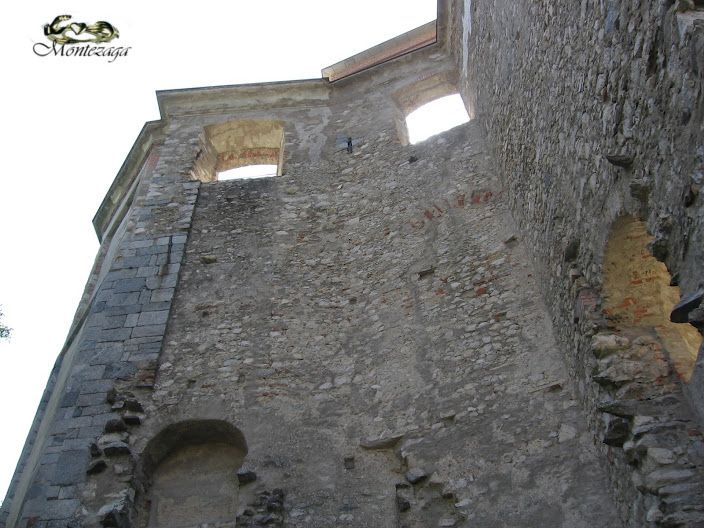
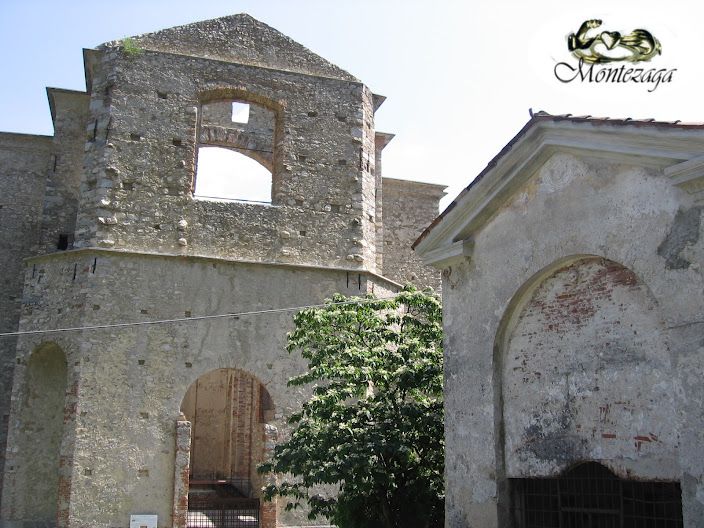 In 1665 a long-standing dispute between Galbiate and Lecco over ownership of the church was settled by a ruling that gave possession of San Michele to the people of Galbiate. The ruling also recognised the efforts the Galbiate community had made to restore the church in order to increase attendance at the sacred site and at the San Michele Fair.
Between 1680 and 1682 the small, decaying Oratory of San Michele was radically renovated, or rather rebuilt. The interior area grew from 25 to about 85 square metres. Its plan changed from rectangular to octagonal, according to the design of the engineer Antonio Riva of Galbiate, and the new Sanctuary, designed by the architect Attilio Arrigoni (already responsible for the famous Rotonda della Besana and Palazzo Sormani in Milan), later incorporated this original little church on a lower level, like a crypt. Among the most generous funders of this work was the notary Francesco Spreafico, who went down in history as the real creator of the great church. In 1690, next to the newly renovated Church of San Michele, the chapel dedicated to Saint Anne was built, popularly known as "the Chapel of the Dead". Saint Anne, mother of Mary, was invoked to obtain a good death because, according to tradition, the saint herself was spared the sufferings of agony thanks to the presence of the infant Jesus at her bedside.
One of the peculiarities of this remote hamlet of the municipality of Galbiate called San Michele, now home to about 30 people, is that the same place is at once a place of worship dedicated to the dead and a setting for popular festivals. In the 16th and 17th centuries, when the plague was raging, this locality was the destination of many pilgrimages and processions of the faithful. In the 18th and 19th centuries the site of San Michele became known above all as the ideal place for popular festivities, culminating in the famous Sagra di San Michele, which remained popular until after the Second World War.
The festival reached its height in the 19th century, and in 1883 even Queen Margherita of Savoy came to San Michele. Of this festival Stoppani wrote in 1885: "Perhaps nowhere in the world is a merrier feast celebrated in a lovelier season. A great September day under the sky of Lombardy, so beautiful when it is beautiful! [...] Every meadow is invaded, every knoll covered, every crag taken by storm. In parties large and small, in knots, in circles, any old how, everyone sits down around the famous baskets, the flask carefully set aside on the grass and wedged so that it won't tumble over, and the rest goes to the teeth. Meanwhile a wave of people comes and goes from every direction. The tide swells; the storm grows. To the great stream coming from Lecco is added the other coming from Galbiate, bringing the people of Brianza..."
Why was this grandiose work never completed and, above all, why were services never held in it? What drove a notary from Galbiate to leave, in his will, half the income from his estate for the construction of such an imposing sacred building in a place so remote and cramped, hardly destined to become a centre of spirituality?
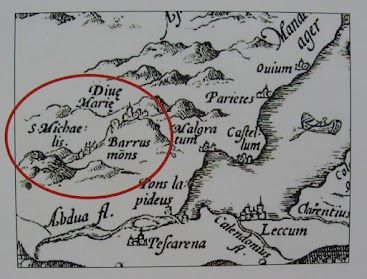
What is certain is that the elevated position of San Michele, dominating the shores of Lake Lecco, recalls the setting of the Sacra di San Michele, which watches from on high over the Susa Valley below, just as vertical development is characteristic of both buildings. Lombard use or foundation is another element these unusual sacred buildings have in common. As for the geomagnetic characteristics of the site, we once again found increased geomagnetism at a place dedicated to Saint Michael the Archangel, with an average field of 60 μT near the building's perimeter walls. The value estimated by NOAA (National Oceanic and Atmospheric Administration) for the site's latitude and longitude is about 47 μT. It was not possible to take a measurement inside the building, as it is inaccessible.
Bibliography
- Il Santuario di San Michele - Parco del Monte Barro, www.regione.lombardia.it
- National Oceanic and Atmospheric Administration, www.noaa.org
Originally published in Italian on the Montezaga blog (montezaga.wordpress.com) →