Ancient astronomers
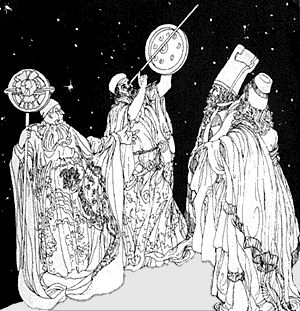 In the 3rd century AD, Diogenes Laërtius said that the ancient Egyptian astronomers had recorded 373 solar eclipses and 832 lunar eclipses. Given Egypt's position and the periodicity of eclipses in a region with many star "temples", those astronomers would have needed 10,000 years to witness that number of eclipses.
Likewise the Maya, on the other side of the world, recorded thousands of eclipses. The hieroglyphs of the famous Dresden Codex describe 77 eclipses that occurred over a period of 33 years, from AD 755 to AD 788. Computer reconstructions of ancient lunar orbits have confirmed that 77 eclipses did indeed occur in this period, but they did not take place along the line of astronomical observatories spread across South America and Mesoamerica. They occurred all over the Earth. This means that observing those eclipses required information from different points around the globe. In short, the Maya needed a worldwide information network to achieve such precision in defining these planetary events, and this information had to be transmitted in an intelligible form from the various collection centres. None of this could have happened among nomadic peoples or sailors blown off course. It could only have happened among a people of navigators and astronomers working with a single mathematical system, regularly and meticulously reporting their observations to a single data-processing centre: an ancient worldwide astronomical university.
Bibliography:
Le Strade di Atlantide (The Atlantis Blueprint / Atlantis in America), I. Zapp, G. Erikson, Piemme
Originally published in Italian on the Montezaga blog (montezaga.wordpress.com) →