Esoteric Symbolism and Sacred Geometry in the Church of San Francesco del Prato in Parma
Introduction
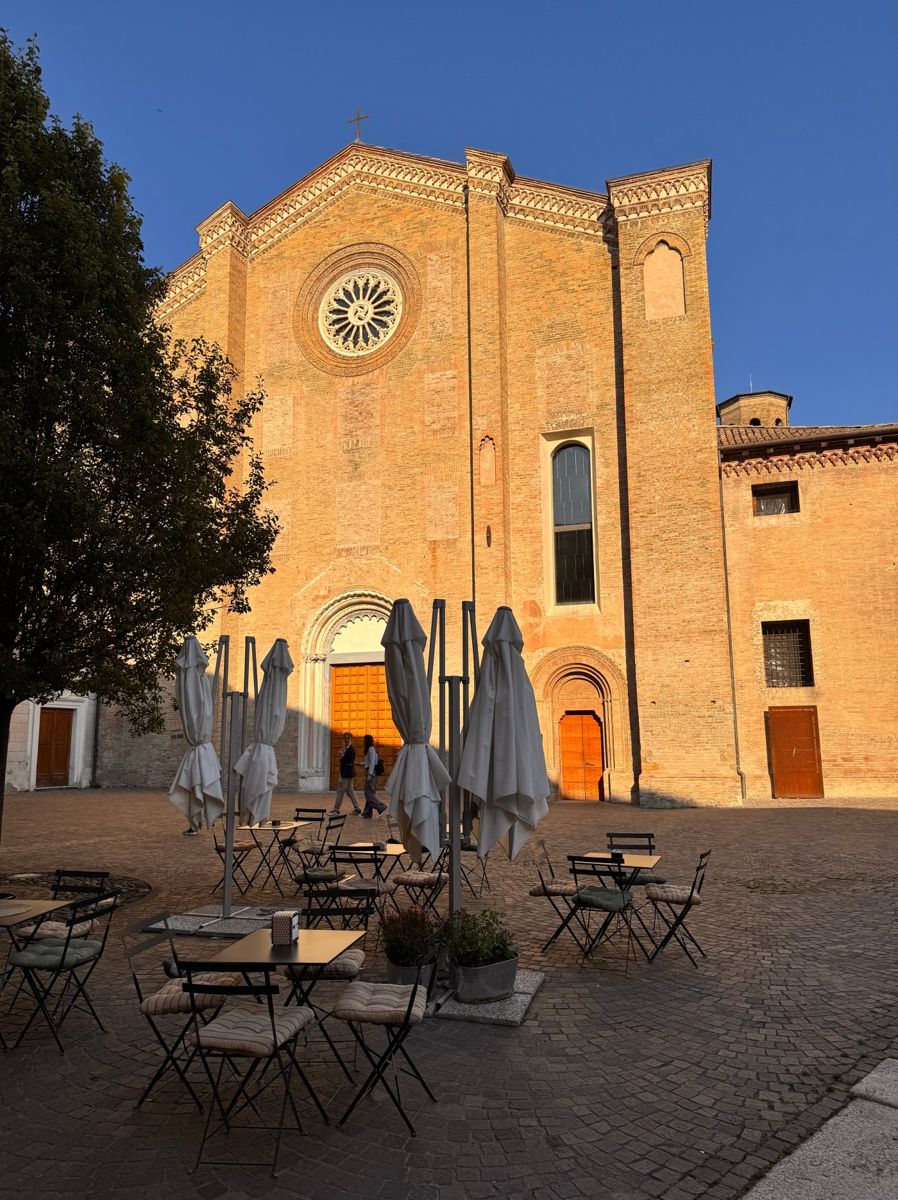
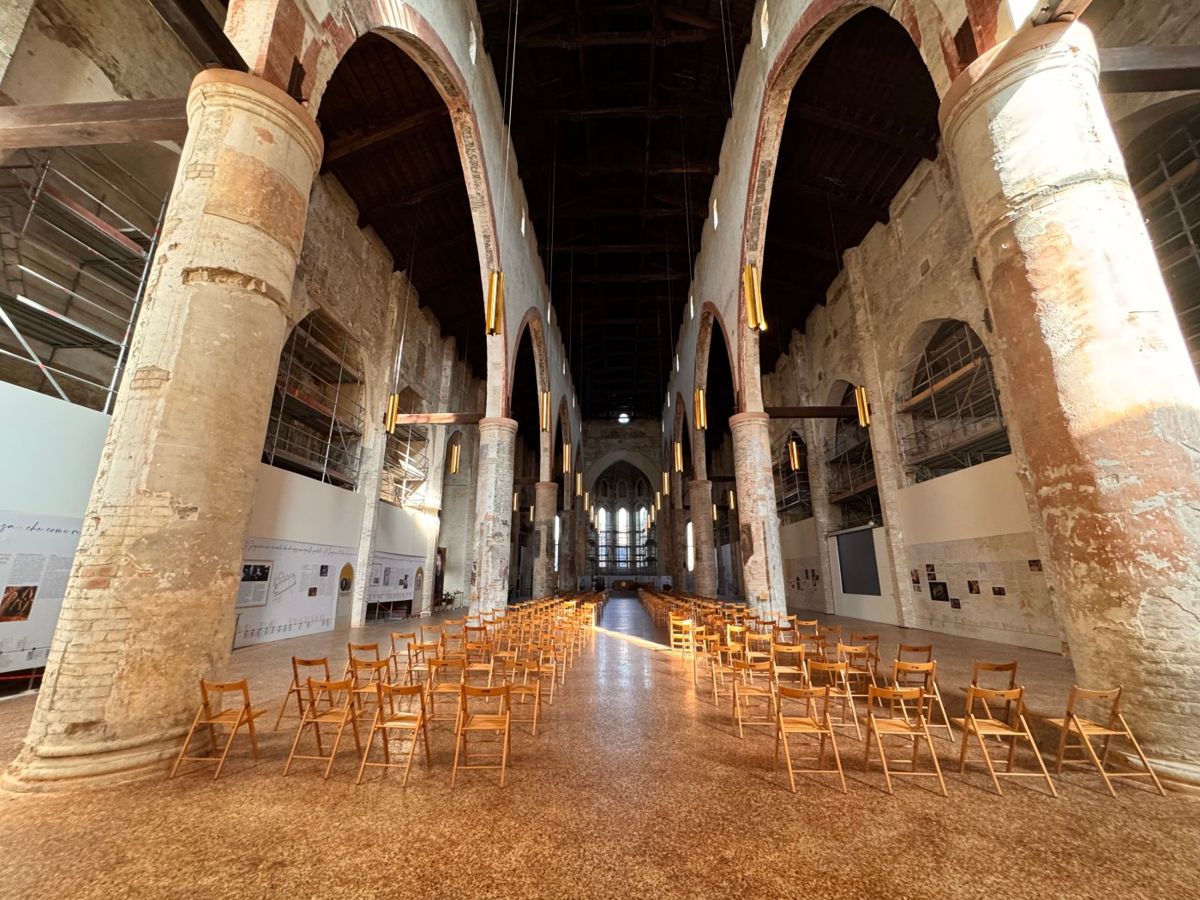
The church of San Francesco del Prato, in the historic heart of Parma, is one of the most significant examples of mendicant Gothic architecture in northern Italy. Built during the 13th century, the church was an integral part of the city's urban and spiritual fabric until it was deconsecrated in the Napoleonic era. The building's recent return to worship has revived historical and architectural interest in it, bringing to light aspects previously overlooked, including a complex symbolic programme based on astronomical orientation, sacred numerology and geometries alluding to medieval cosmology.
While traditional historiography has focused mainly on the building's liturgical and historical function, a broader historical-esoteric approach makes it possible to identify a design intended to represent the cosmos according to the patterns of medieval theology and Neoplatonic philosophy. While maintaining documentary and methodological rigour, this analysis proposes a reading that considers the church not only as a place of worship but also as a "symbolic machine" capable of embodying and transmitting complex knowledge.
1. Astronomical Orientation and the Solar Cycle
One of the most evident elements in the construction of San Francesco del Prato is its astronomical orientation. The church is aligned so that the apse faces the point where the sun rises on the winter solstice, while the façade faces the sunset of the summer solstice¹. This solar orientation, also found in other religious buildings of the same period, is a precise symbolic choice: the rising of the winter sun represents the rebirth of light in the darkness, a metaphor for the Christian Resurrection, while the summer sunset coincides with the peak of light, followed by its decline.
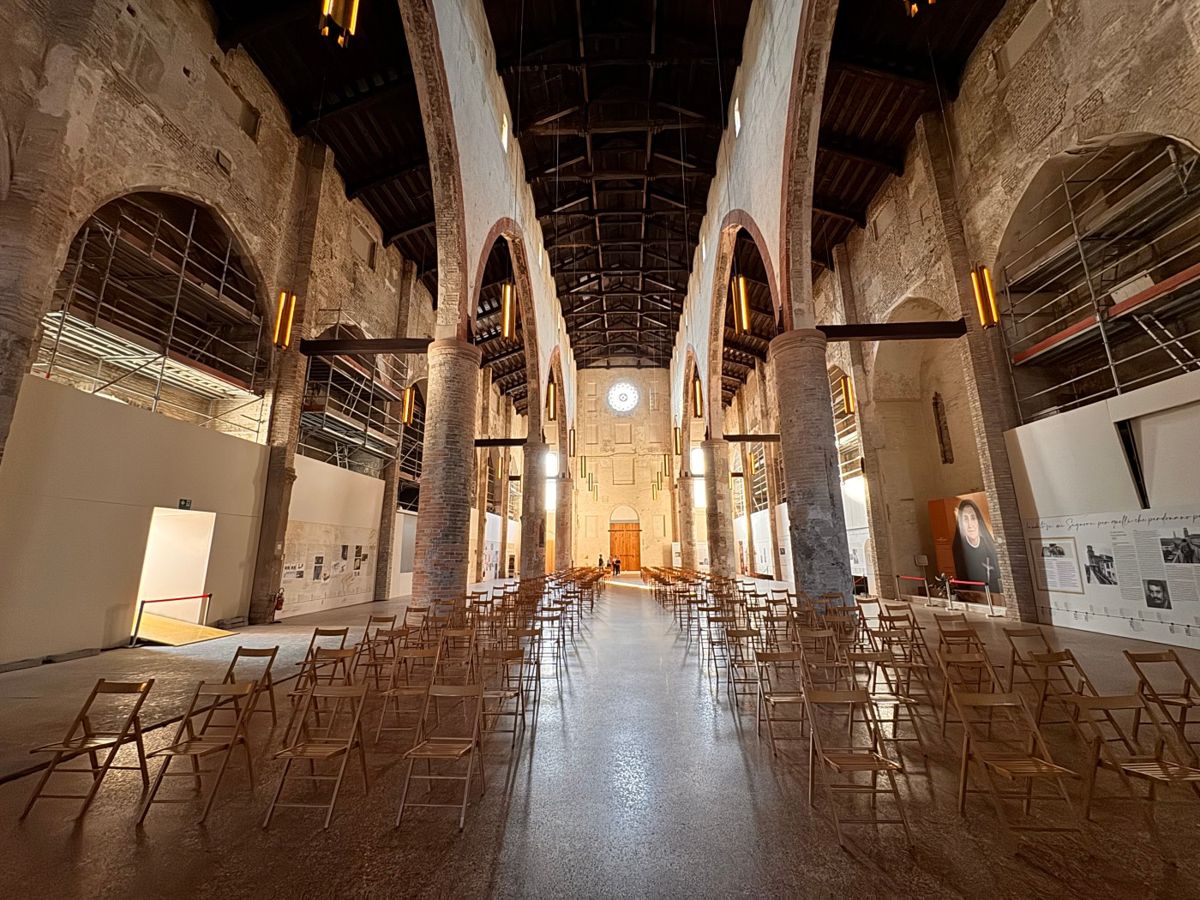
Such solar symbolism is deeply rooted in medieval culture and refers to an ancient cosmological conception in which liturgical time and natural time intersect and mirror each other. In the Franciscan context this correspondence is further reinforced by the figure of Saint Francis himself, often represented as an alter Christus and associated with cosmic and solar symbols².
2. The Rose Window and Sacred Numerology
The rose window of the main façade, made in 1461 by Master Alberto da Verona³, is another manifestation of the numerical symbolism present in the building. With a diameter of one Parma pertica (about 3.27 metres), it is divided into 16 spokes. The number 16, rarely used in ordinary Christian symbolism, nonetheless has significant value in mystical numerology: it can be read as the square of 4, associated with the cardinal points, the elements and earthly balance. The multiplication of this principle suggests the totality of ordered creation, visible and invisible⁴.
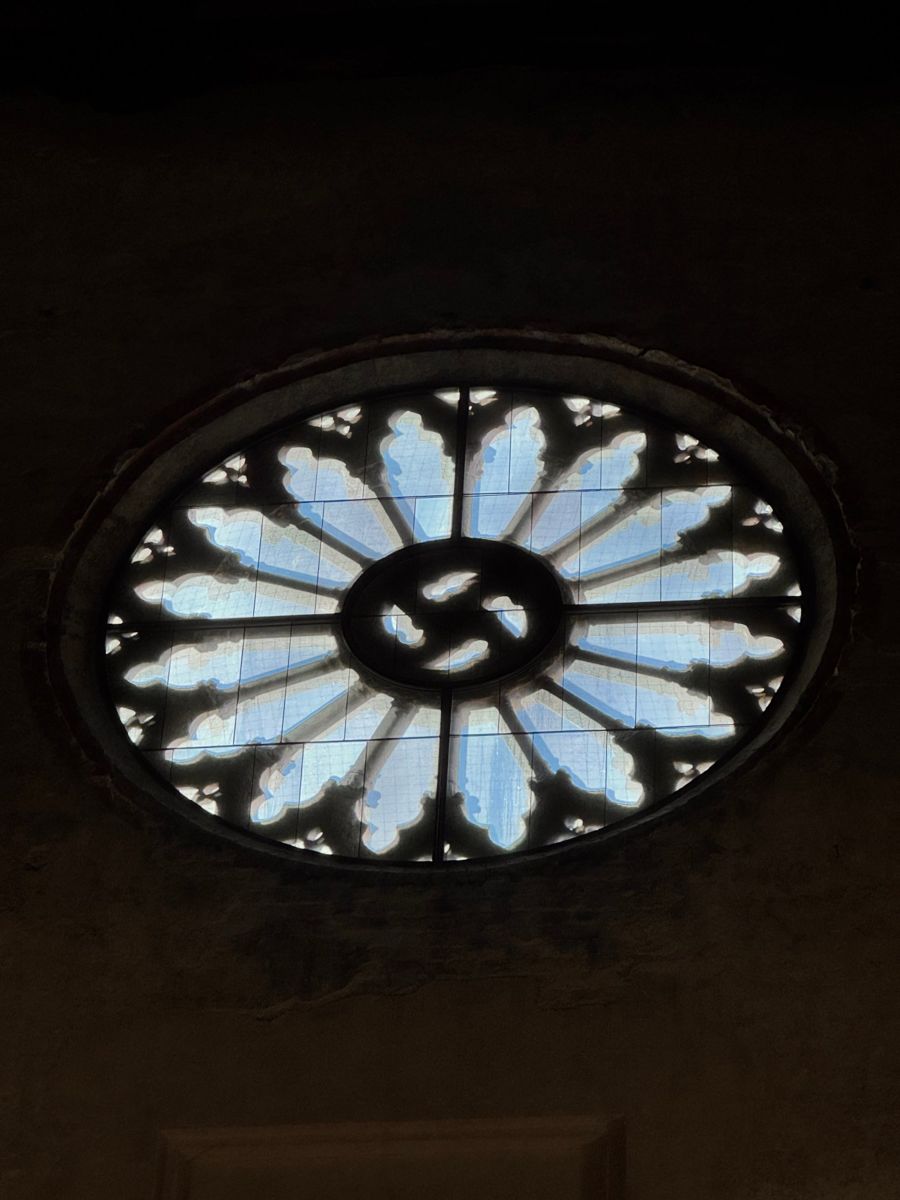
Moreover, the rose window, conceived as a "cosmic wheel", represents in the Gothic tradition the firmament and, symbolically, divine perfection. Its central position on the façade thus takes on both an aesthetic and a theological function: it is the window through which divine light enters the sacred space, filtered by geometry.
3. Sacred Geometry and Urban Placement
A further level of architectural symbolism in the church of San Francesco del Prato concerns the use of sacred geometry and its integration into the urban fabric of Parma. Several scholars have suggested that the city's main religious complexes founded in the 13th century, including San Giovanni Evangelista, the Cathedral and San Francesco del Prato, form a golden rectangle, a figure based on the golden ratio (φ ≈ 1.618), regarded as a symbol of perfection and harmony in the Neoplatonic and medieval tradition¹⁵.
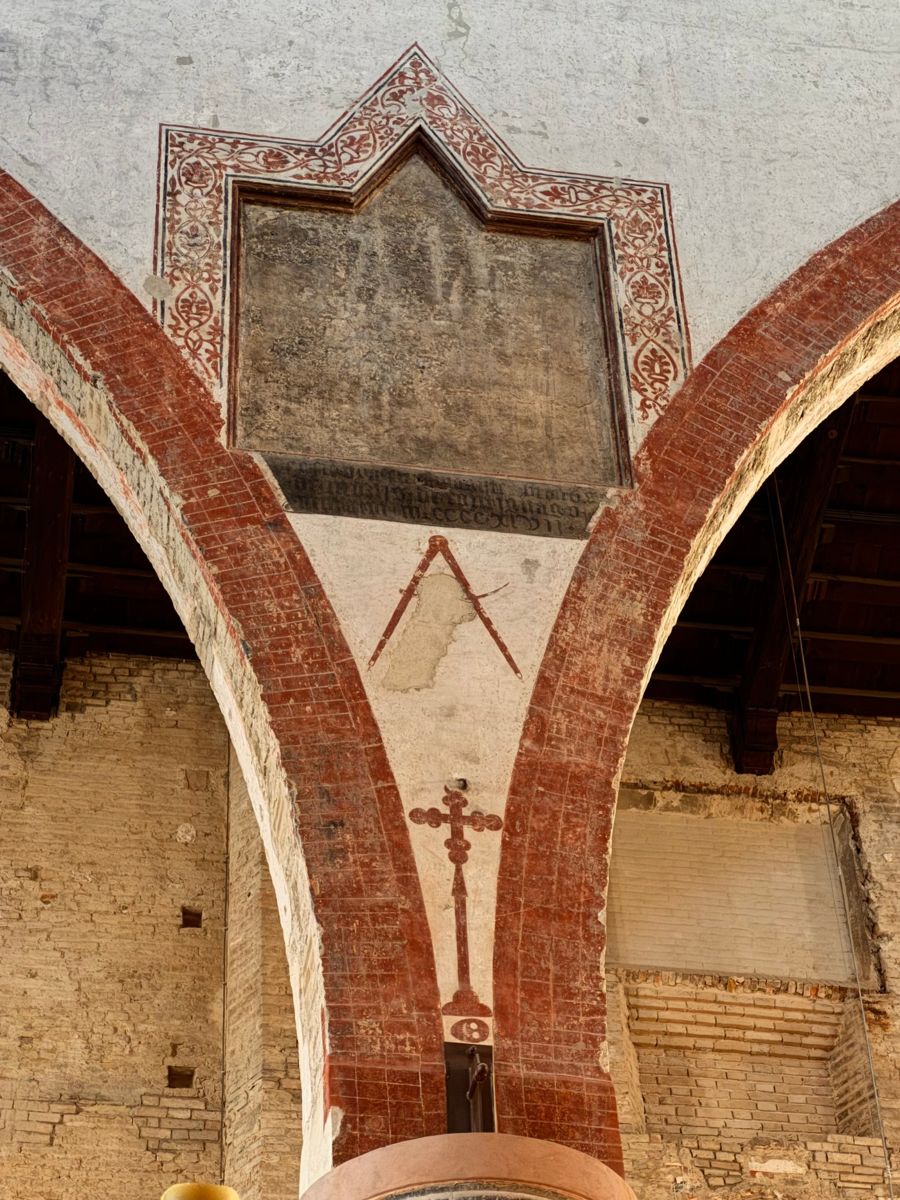
Even more evocative is a possible symbolic alignment between the fresco of Saint Francis in the Baptistery, the geometric centre of the Baptistery itself and the entrance to the church. This ideal line could be interpreted as a spiritual "line of force" connecting Christian Baptism (the place of initiation) with the Franciscan path, marking a mystical progression from birth to spiritual perfection¹⁶.
The use of geometry as a symbolic tool was known from classical antiquity and was recovered by medieval master builders through the mediation of Arab and Byzantine culture. It had not merely ornamental or functional value; it was a language capable of communicating invisible realities through visible structures¹⁷.
4. Esoteric Symbolism between Theology and Architecture
Although there are no direct sources attesting to a conscious adherence to esoteric doctrines on the part of the designers of San Francesco del Prato, the elements described above (solar orientation, numerology, sacred geometry) allow a symbolic reading consistent with the cosmological and sacramental vision of the Middle Ages.
In particular, the symbolism of light, whose entry into the church is regulated by the rose window and the side openings, reflects a theology of manifestation: light is a sign of the divine presence and, according to Dionysius the Areopagite, a vehicle of mystical knowledge¹⁸. This concept was taken up both by the School of Chartres and by the mendicant orders, which fused spirituality, architecture and natural philosophy.
This is not necessarily esotericism in the occult sense, but rather a sacred esoterica: a symbolic knowledge reserved for "initiates" in the spiritual sense of the term, namely monks, friars, builders and theologically trained patrons.
5. Critical Considerations
Despite the evident symbolic coherence between the components of the building, arbitrary interpretative excesses should be avoided. The absence of explicit documentation attesting to esoteric or initiatory intent does not allow San Francesco del Prato to be placed in a "Masonic" or "Gnostic" context in the modern sense of these terms. Nevertheless, the interaction between architecture and medieval theology justifies the use of symbolic interpretative tools capable of restoring the cultural horizon in which the church was born.
As Eco observes, medieval aesthetics is founded on a principle of correspondence between microcosm and macrocosm: the sacred building becomes a reflection of the ordered cosmos, and every measurement, orientation or form takes on theological and metaphysical value¹⁹.
6. Conclusions
The church of San Francesco del Prato is a complex work in which mendicant Gothic architecture merges with a sacred conception of space and time. Its astronomical orientation, the numerological structure of the rose window, the use of sacred geometry and the possible symbolic urban planning are elements that reveal a deep level of symbolic intent.
Far from being mere decoration or coincidence, these aspects reflect a medieval world view in which the sacred is manifested in matter and the building becomes a visible image of the divine order.
Bibliography
Dionysius the Areopagite. *La gerarchia celeste* (The Celestial Hierarchy). Translated by G. Faggin. Milan: Rusconi, 1981.
Eco, Umberto. *Arte e bellezza nell’estetica medievale* (Art and Beauty in the Middle Ages). Milan: Bompiani, 2002.
Ottiche Parallele Magazine. “Parma, San Francesco del Prato. La luce torna a emozionare nei giorni più lunghi dell’anno.” 12 June 2024. https://otticheparallelemagazine.com/2024/06/12/parma-san-francesco-del-prato-la-luce-torna-a-emozionare-nei-giorni-piu-lunghi-dellanno/.
Vasoli, Cesare. “Simbolismo della luce nella mistica francescana.” *Studi Medievali* 38 (1997): 45–67.
Wikipedia. “Chiesa di San Francesco del Prato.” Last edited: May 2025. https://it.wikipedia.org/wiki/Chiesa_di_San_Francesco_del_Prato.
Wittkower, Rudolf. *Architectural Principles in the Age of Humanism*. London: Academy Editions, 1973.
Originally published in Italian on the Montezaga blog (montezaga.wordpress.com) →