The Exegesis of Stone: the Symbolism of Romanesque Capitals
In the architectural universe of the Middle Ages, the capital is not only the mechanical link between the vertical support and the arch; it is an ontological frontier. It is the place where the inert matter of the column turns into narrative, becoming an instrument of mediation between the human and the divine.
Romanesque sculpture does not pursue classical naturalism; it aims at a formal synthesis in which every line is a concept and every figure a moral warning or a theological revelation.
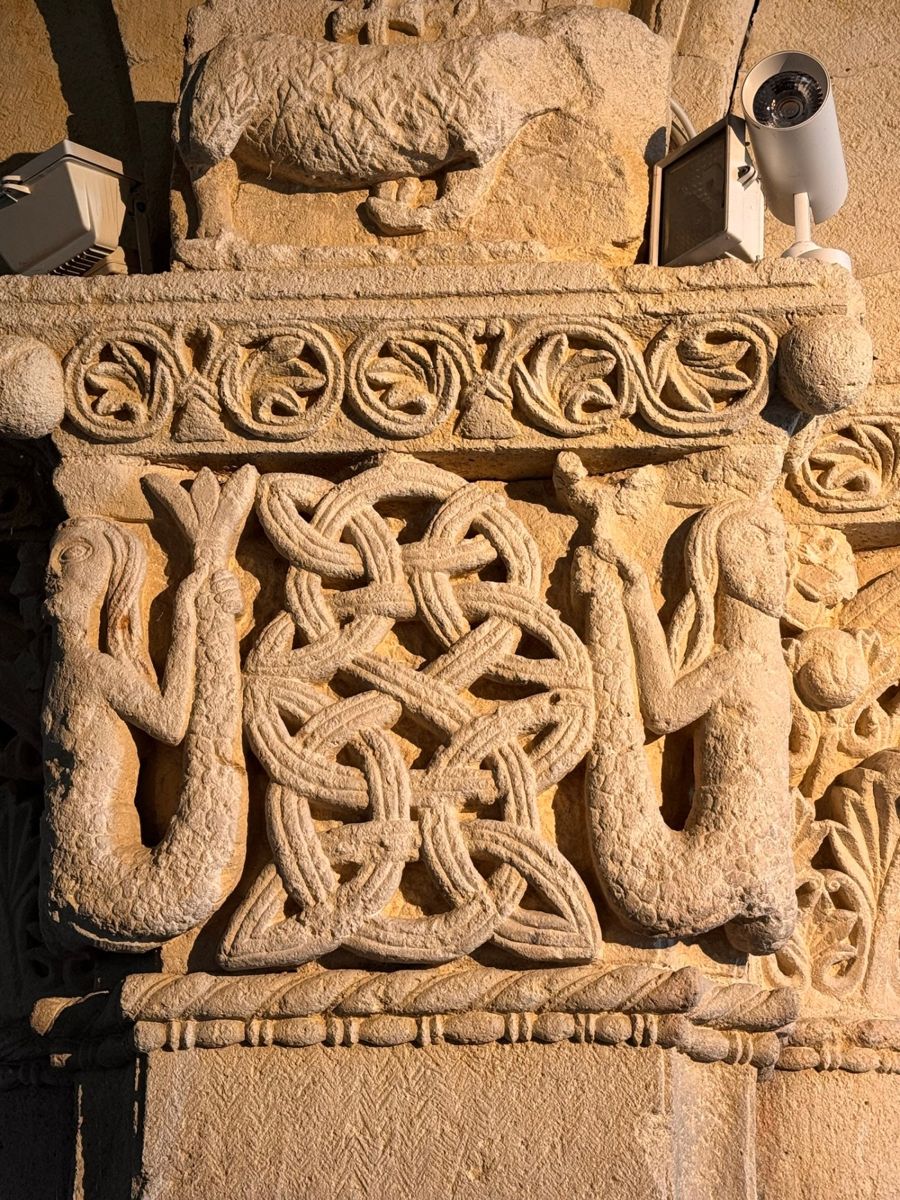
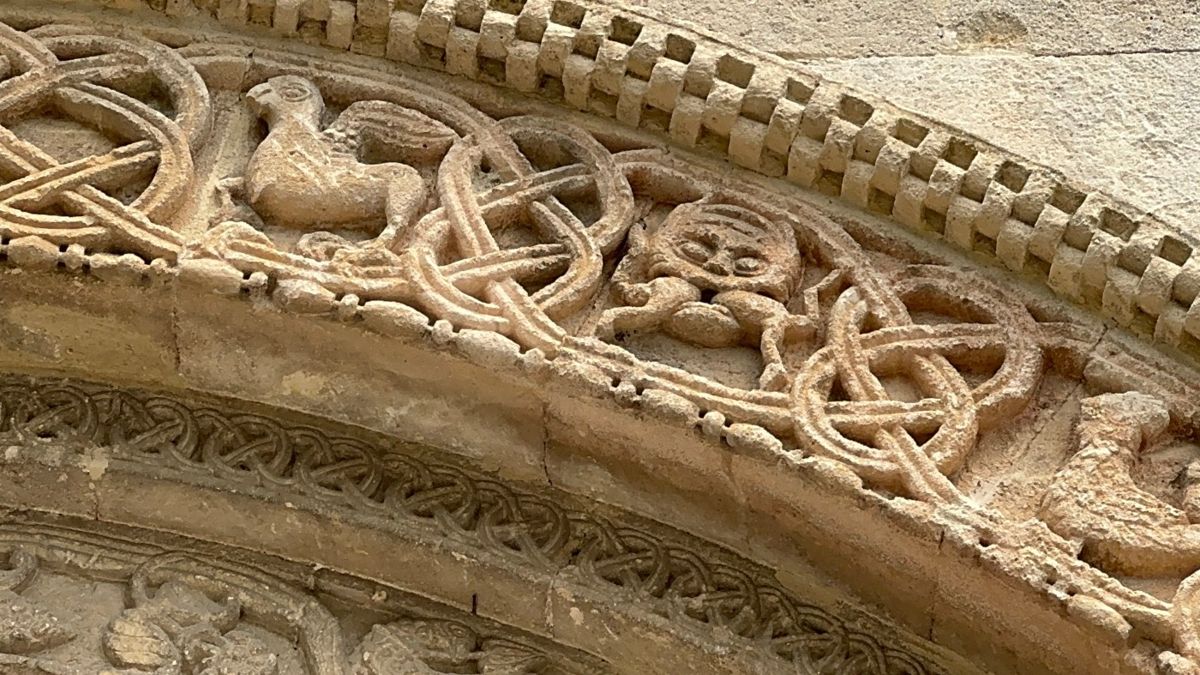
I. The Geometry of the Absolute: Interlace and Knots
Aniconic decoration, often of Celtic-Lombard derivation, occupies a central place in the early Romanesque. These motifs are not purely ornamental but respond to precise doctrinal concerns.
- The Endless Knot: bands intersecting without interruption symbolise divine eternity and the unity of Creation.
- Apotropaic Function: complex interlace (the "vertical labyrinth") was meant to "confuse" demonic forces.
II. The Medieval Bestiary: A Moral Zoology
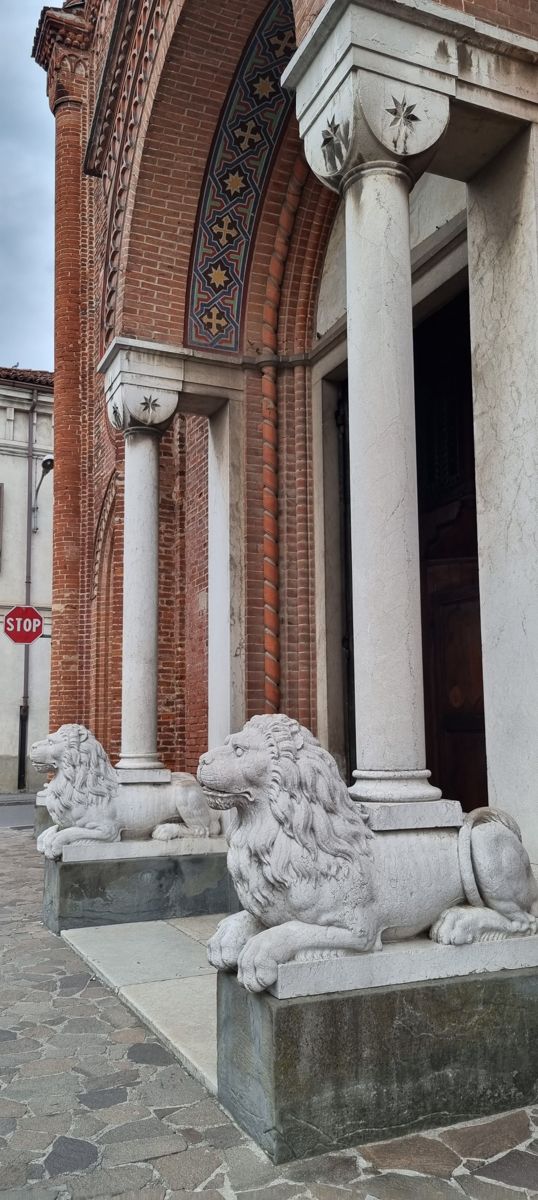
The Romanesque capital is famous for introducing animal and fantastic figures, often borrowed from the Physiologus.
1. Land Creatures and Christological Strength
- The Lion: a polyvalent symbol. It represents the strength of Christ, but also the danger of sin when shown as a devouring beast.
- The Lamb (Agnus Dei): a representation of sacrifice and purity.
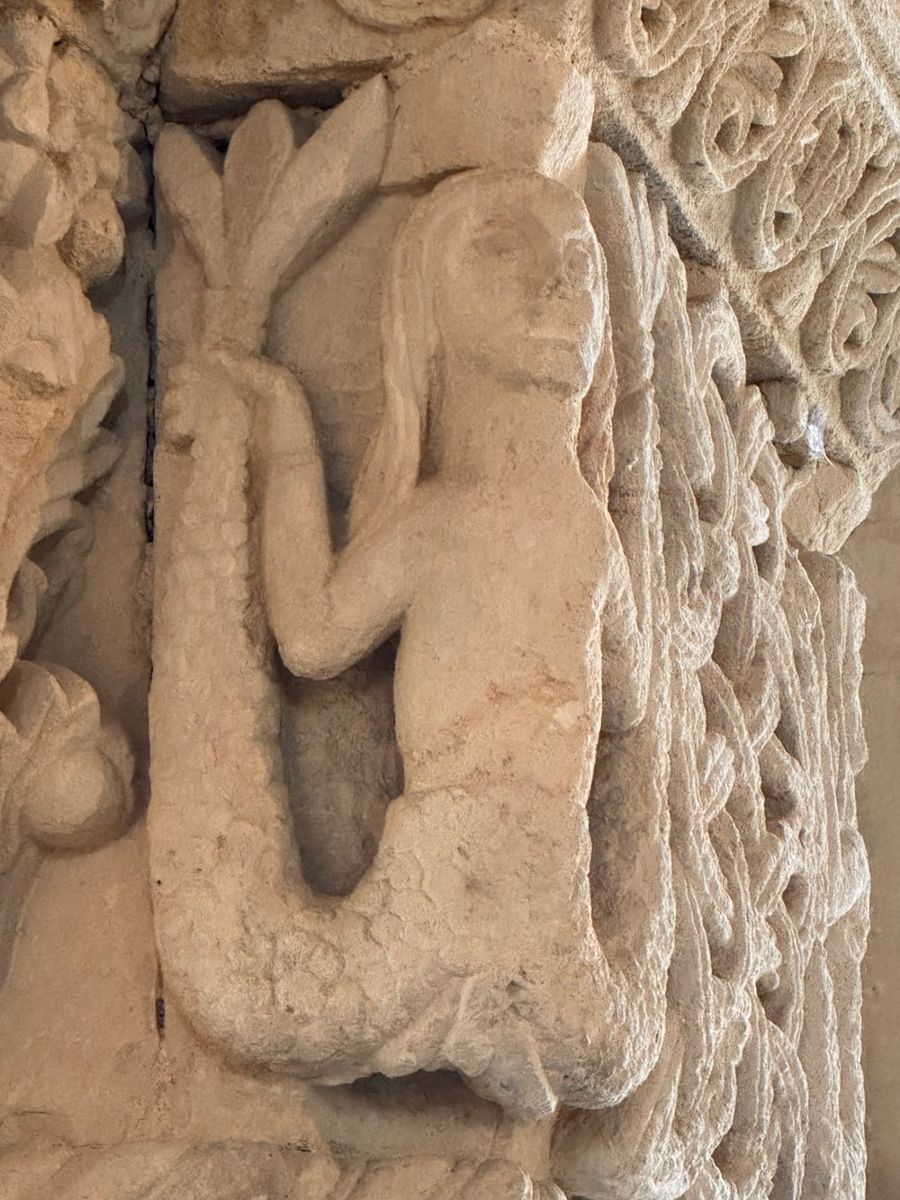
2. Hybrid Creatures: The Tension of the Soul
- Sirens and Tritons: they personify the seduction of the senses and the duplicity of the human soul, divided between its spiritual and its bestial side.
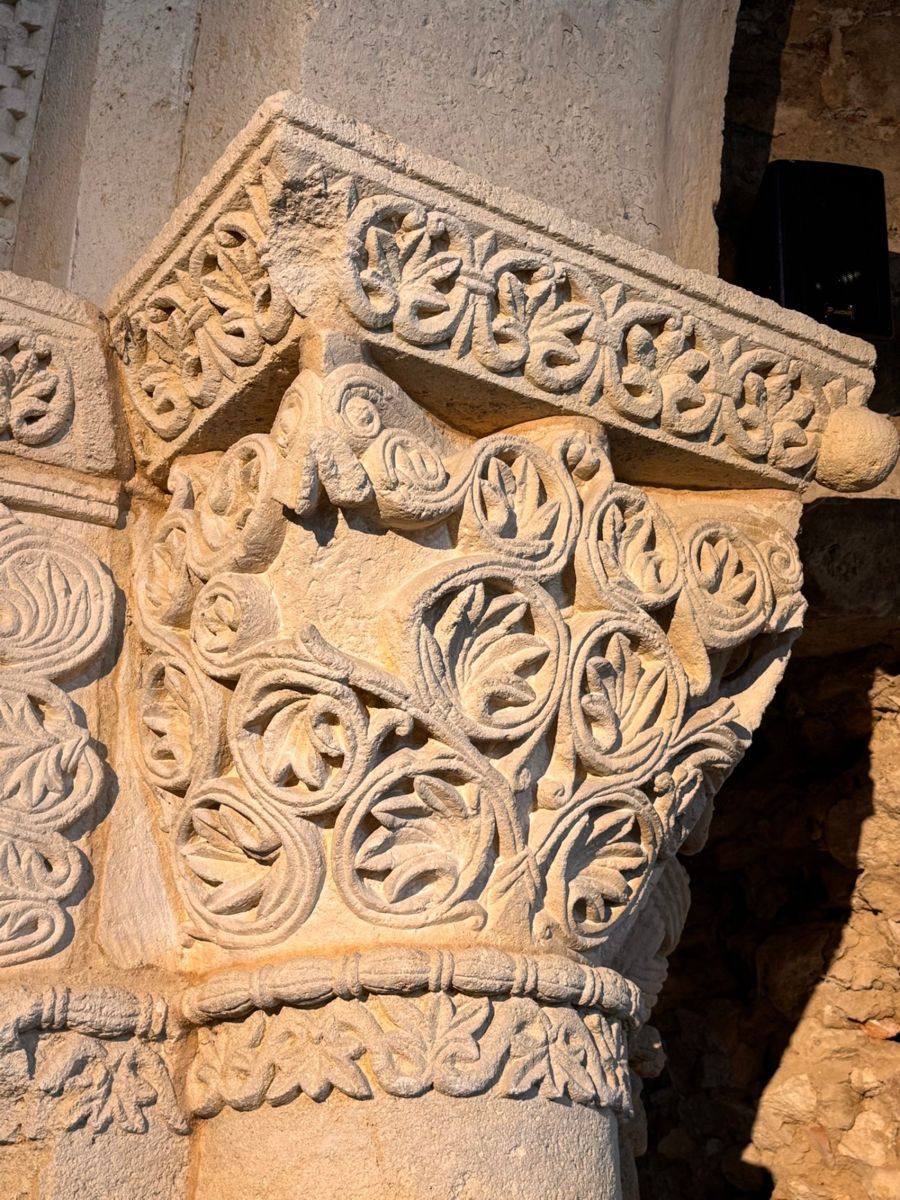
III. Plant Symbolism: The Cosmos in Bud
Foliate decorations are abstractions of the concept of spiritual regeneration.
- Acanthus: taken from antiquity, it is reinterpreted as a symbol of immortality and resurrection.
- The Vine and the Branch: a reference to the Gospel parable ("I am the vine"), it represents the union between Christ and his Church.
IV. Anthropomorphism: The Drama of Salvation
When the human figure appears, the sculpture becomes theatrical, staging the destiny of humankind.
- Telamons and Atlantes: figures straining to support the abacus, symbolising the human condition weighed down by original sin.
- Sinners and Vices: grotesque depictions of the Miser (with a purse around his neck) or of Lust, which served as visual warnings.
V. Conclusion: The Church as an Ordered Cosmos
The sculptural programme of Romanesque capitals is a visual anthology of medieval wisdom. Through stone, the teaching Church offered the people a map for finding their way through the chaos of the sensible world. Each capital is a piece of a larger mosaic that transforms the sacred building into a projection of the Heavenly Jerusalem.
Originally published in Italian on the Montezaga blog (montezaga.wordpress.com) →