Castelseprio: two thousand years of history in the heart of the Varese area
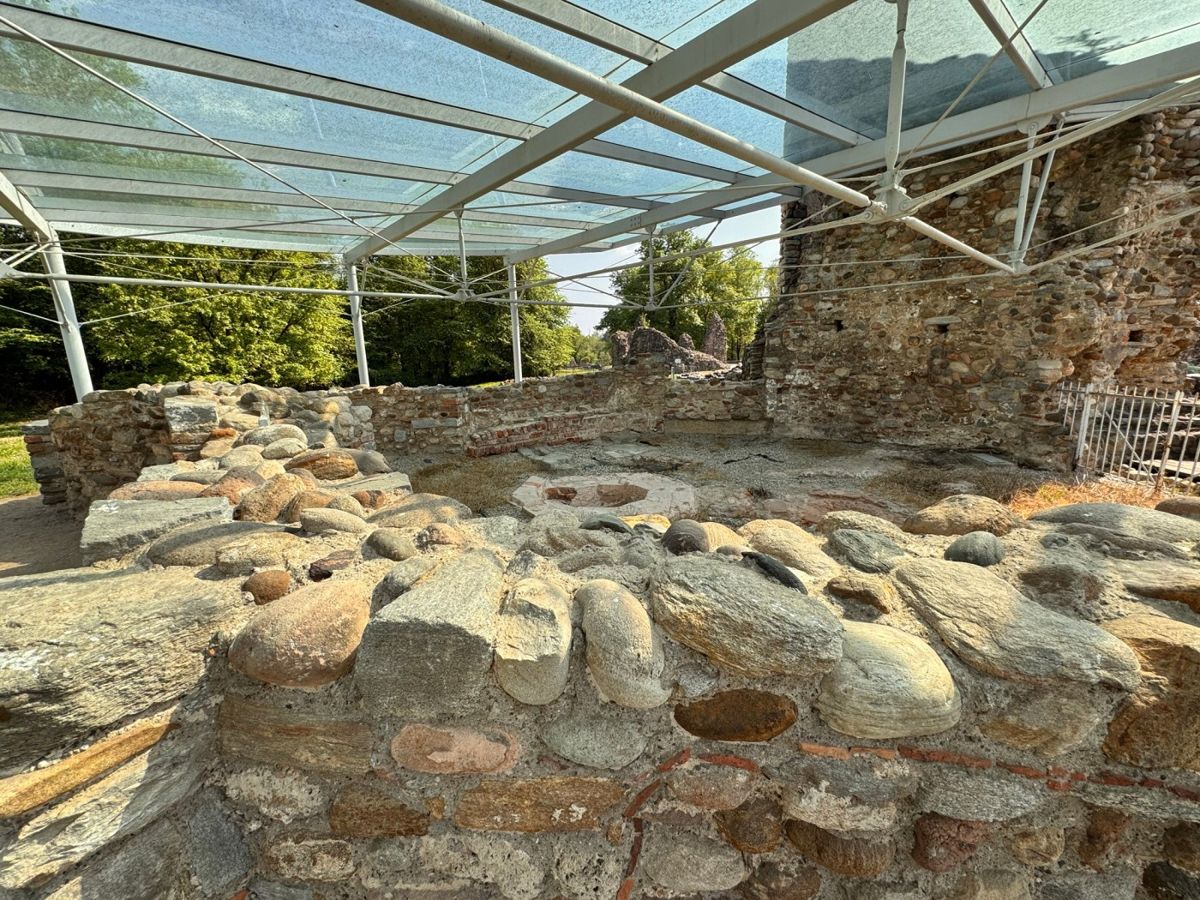
A late Roman castrum, the Lombard frescoes of Santa Maria foris portas and the peace of an ancient forest, all in a single site that since 2011 has belonged to all humanity.
A town born to defend the plain
The site of Castelseprio, the ancient Castrum Sibrium, did not come about by chance. It stands on a plateau overlooking the middle Olona Valley, in a position that in the 4th–5th centuries AD was of fundamental strategic importance: it controlled the road from Canton Ticino, the natural link between the transalpine area and the fertile Po Valley. When the great migrations of Germanic peoples began to press on the borders of the Empire, Rome needed garrison points like this one.
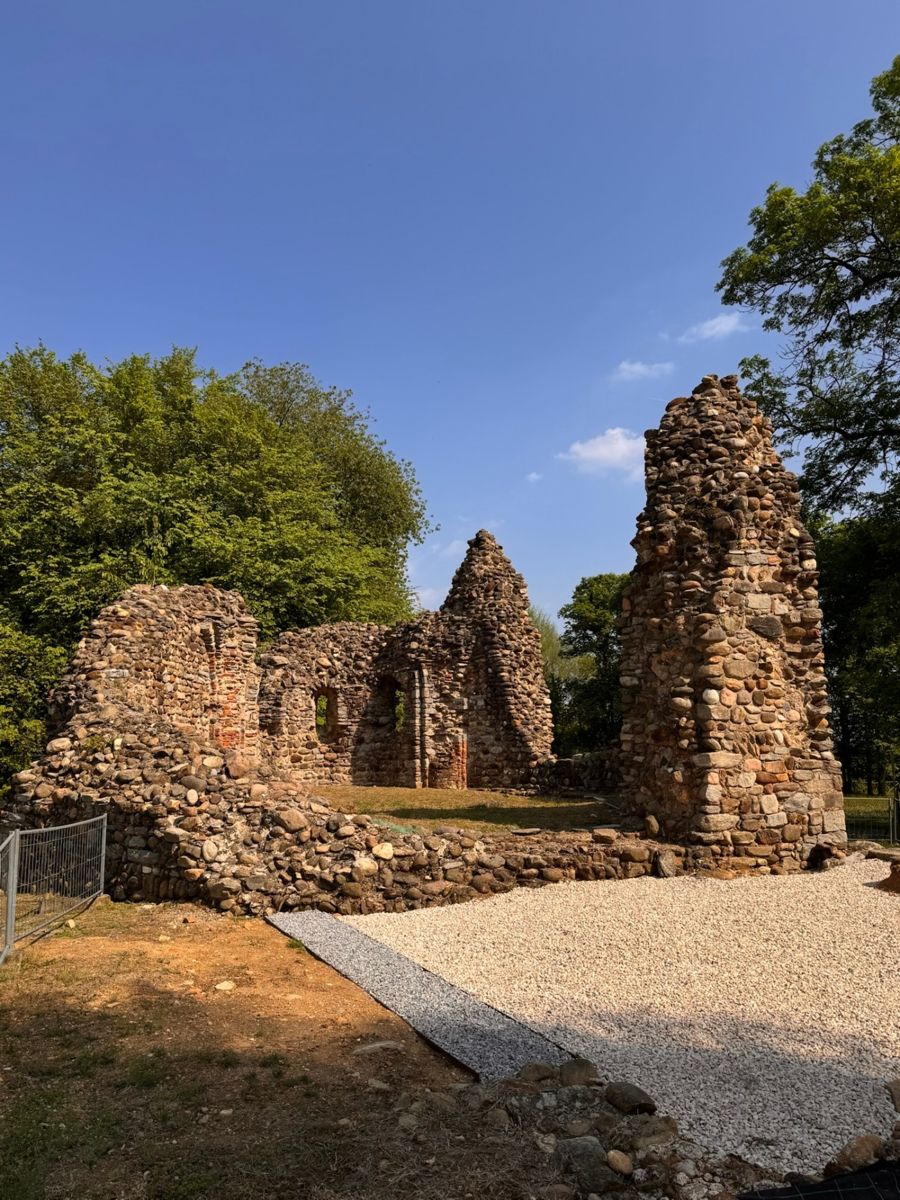
Human traces on the plateau, however, are much older: pottery and other finds document occupation as early as the late Bronze Age and early Iron Age (10th–9th centuries BC), with a necropolis of Insubrian character near what would later become the church of Santa Maria foris portas.
The age of the Lombards: Castelseprio's golden moment
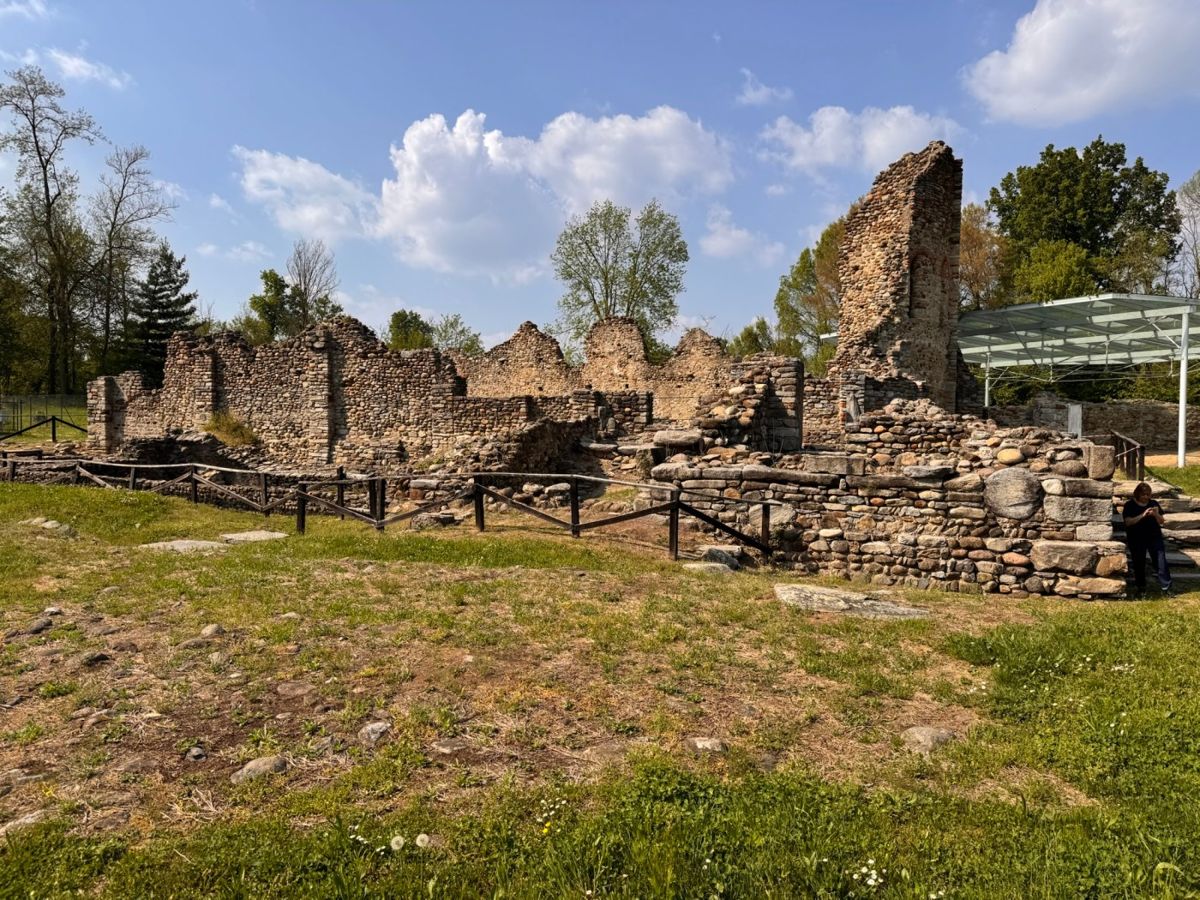
After the Goths and the Byzantines, it was the Lombards, between the late 6th century and AD 774, who turned Castelseprio into the beating heart of an entire territory. Here resided a gastald, the royal administrator responsible for managing the king's estates. Under him the settlement grew: churches were built, nobles were buried inside and outside the complex of San Giovanni Evangelista, and a landscape of power took shape that stretched down to the valley floor, where the Monastery of Torba stands.
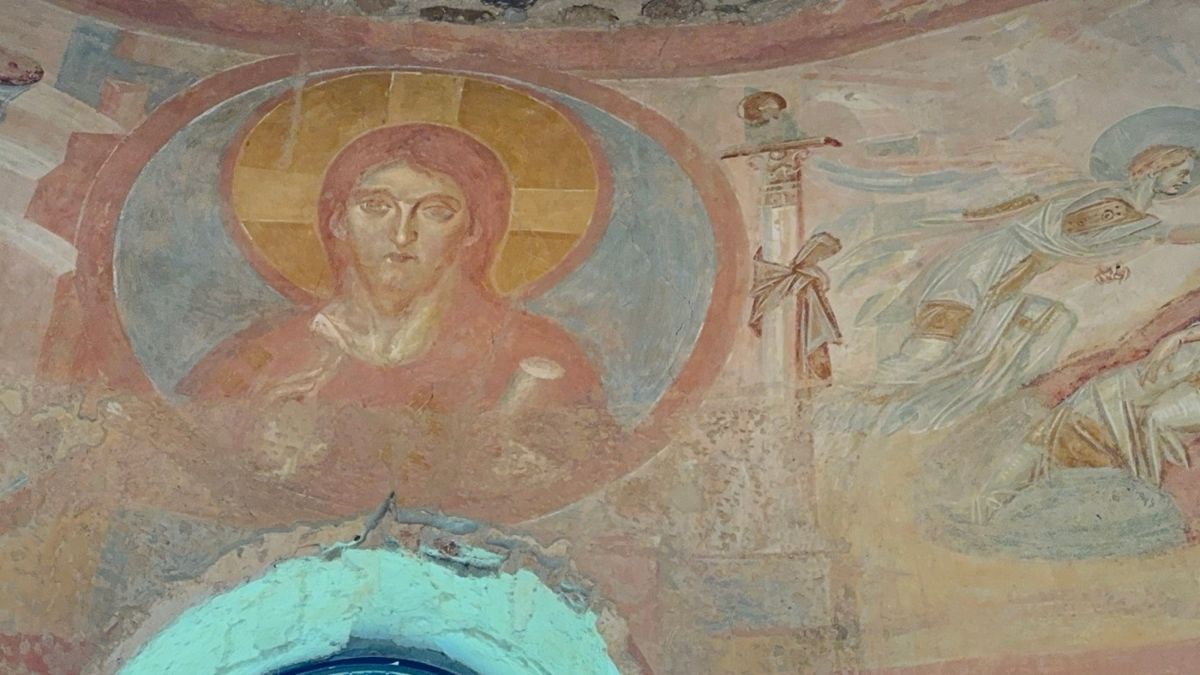
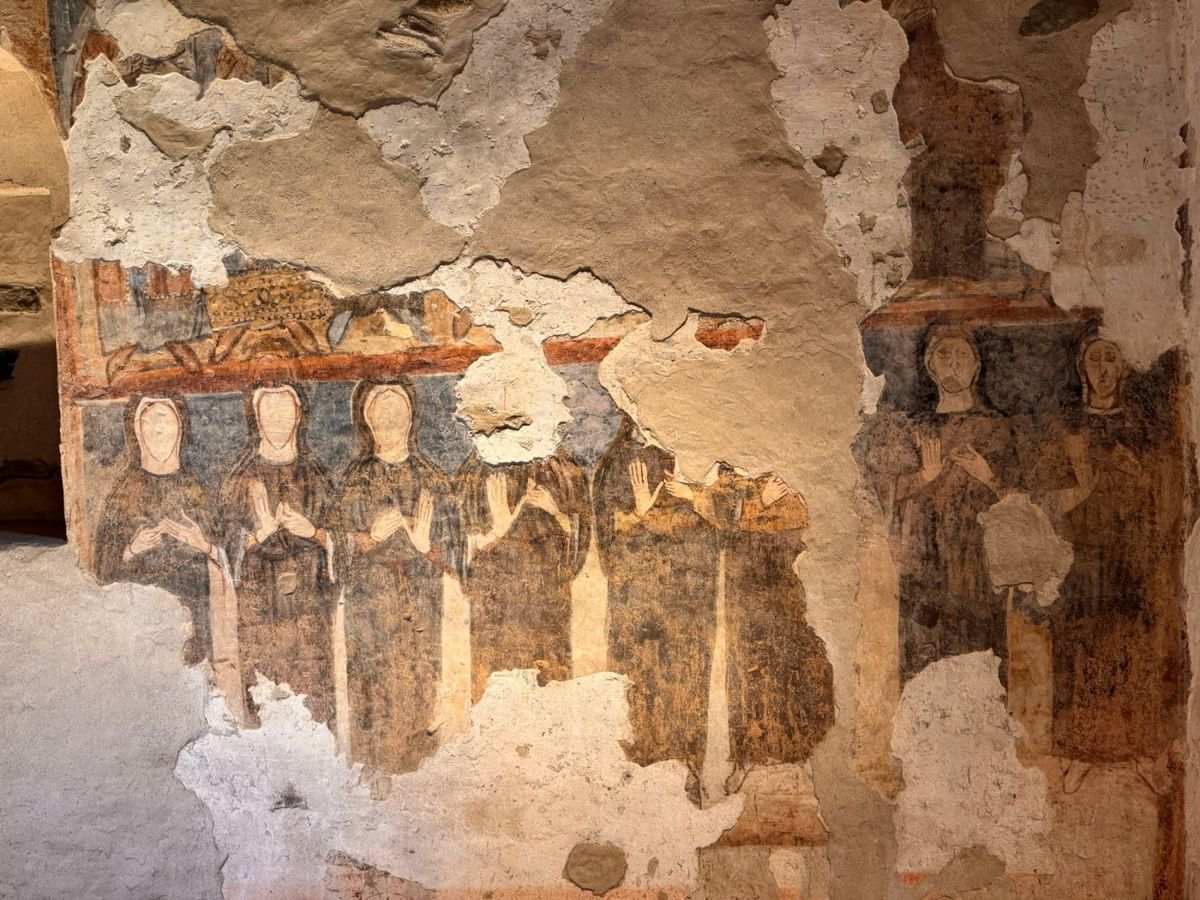
It was in this period that the church of Santa Maria foris portas ("outside the gates") was built, the monument that is still the absolute jewel of Castelseprio. Small and intimate, with a trefoil plan, it preserves in its eastern apse one of the most enigmatic and fascinating painted cycles of the early Middle Ages.
The frescoes of Santa Maria tell the story of the Nativity and childhood of Christ, drawing on apocryphal Gospels of the Eastern tradition. The style is lively, almost "impressionistic", and entirely unusual for the period. Their dating, between the 6th and 9th centuries, is still debated by scholars: a mystery that makes them all the more precious.
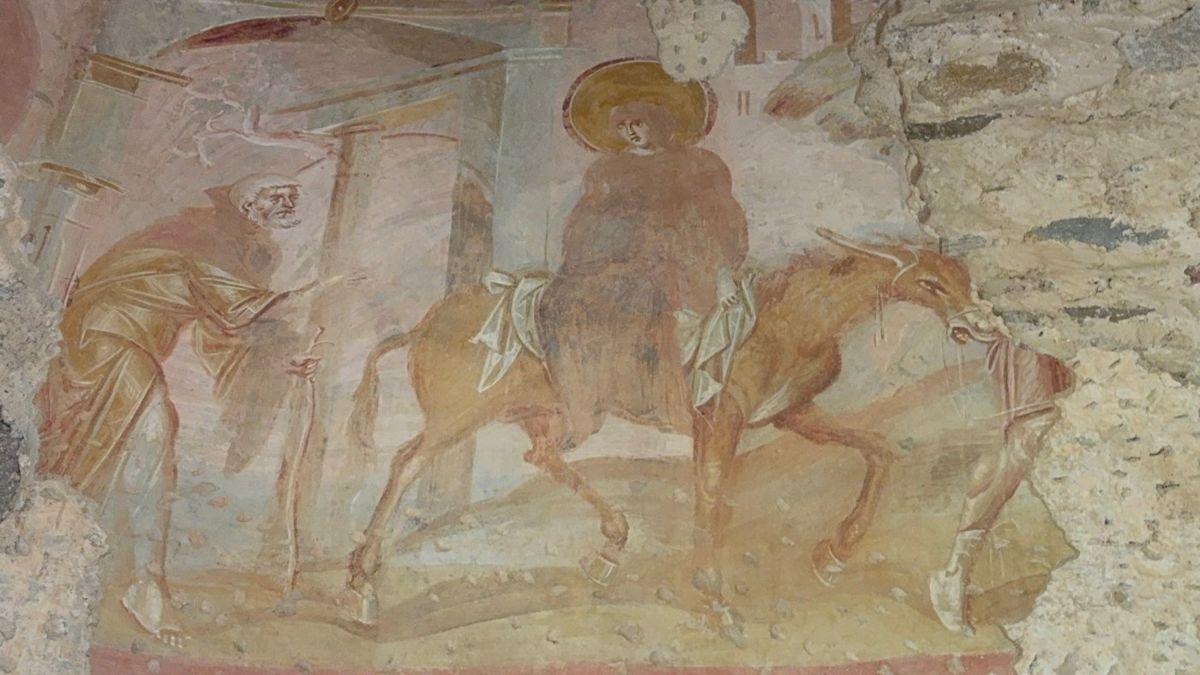
Source: Ministero della Cultura / Direzione Regionale Musei Lombardia
Ottone Visconti's sentence and the long silence
The end of Castelseprio was abrupt and final. Between 1285 and 1287, during the struggles between the Visconti and the Della Torre, the Milanese razed the settlement to the ground. Archbishop Ottone Visconti issued a decree that left little room for interpretation: "Castrum Seprium destituatur et perpetue destructum teneatur": the castle must be destroyed and kept destroyed forever.
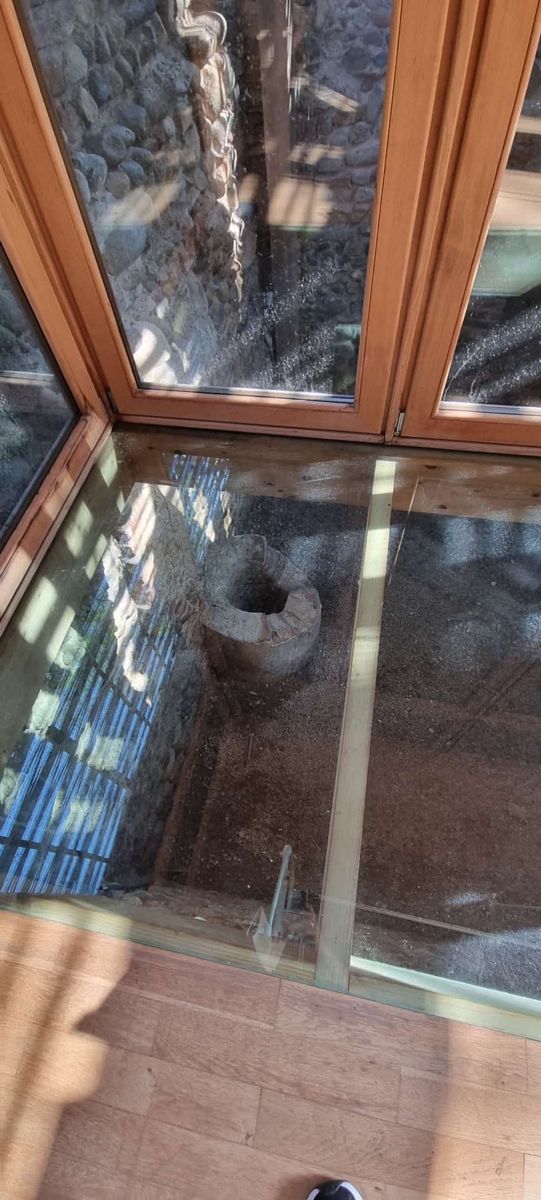
Only the churches were spared, and services were held in them until the 17th century. Then came silence. For centuries the forest reclaimed the plateau, hiding towers, walls, houses and wells. An entire town vanished under the vegetation.
Rediscovery and UNESCO status
The turning point came in 1944, when the historian Gian Piero Bognetti discovered and made public the frescoes of Santa Maria foris portas, at that time used as a farm storehouse. Between 1946 and 1958 the first systematic excavation campaigns began: the forest was cleared and the ruins came to light again. The Archaeological Park was born.
In 2009 the Antiquarium was added, housed in the former convent of San Giovanni: five rooms telling the material history of the site through pottery, glass, coins, frescoes and metal artefacts. On 26 June 2011 came the definitive recognition: UNESCO inscribed Castelseprio-Torba on the World Heritage List as part of the serial site "Longobards in Italy. Places of Power (568–774 A.D.)", together with six other Italian locations.
What to see today
Santa Maria foris portas
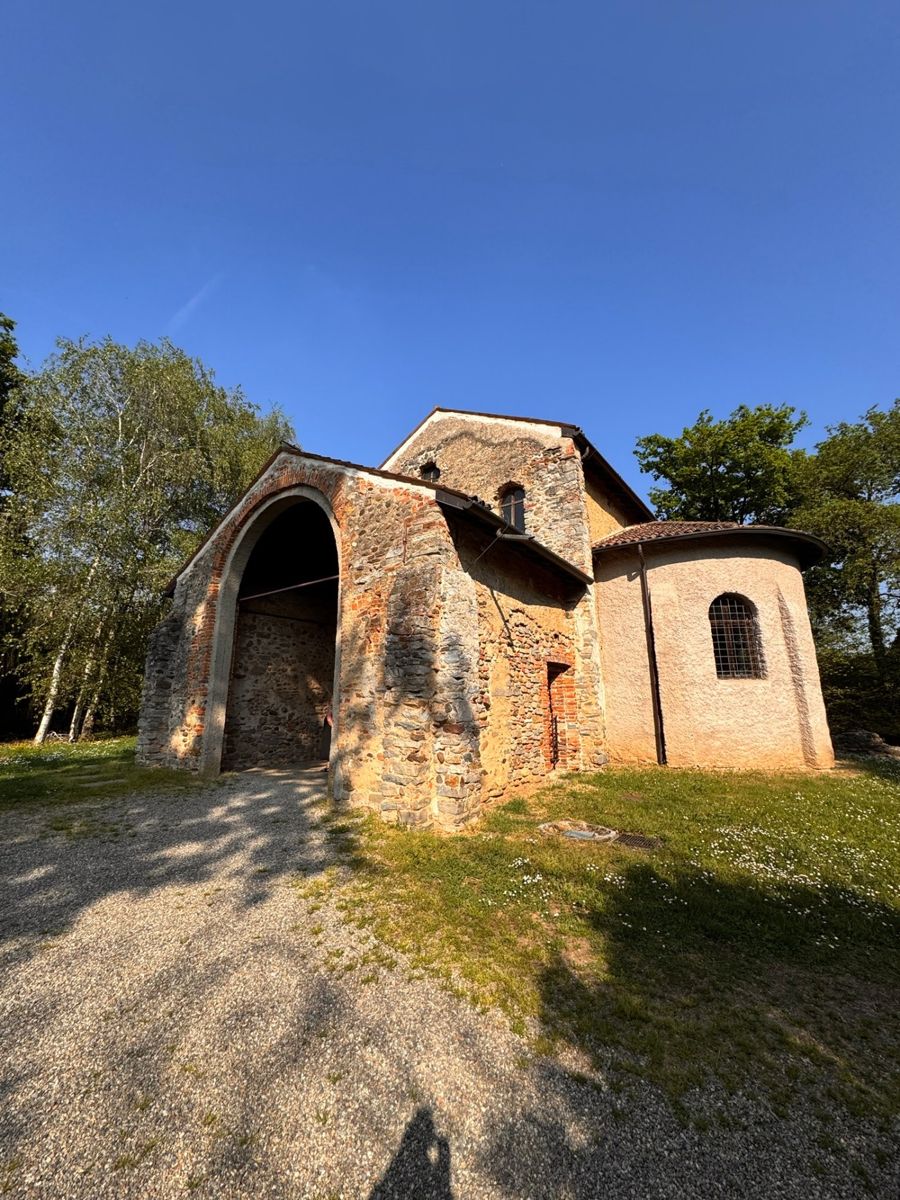
Early medieval frescoes of extraordinary rarity. The absolute jewel of the site.
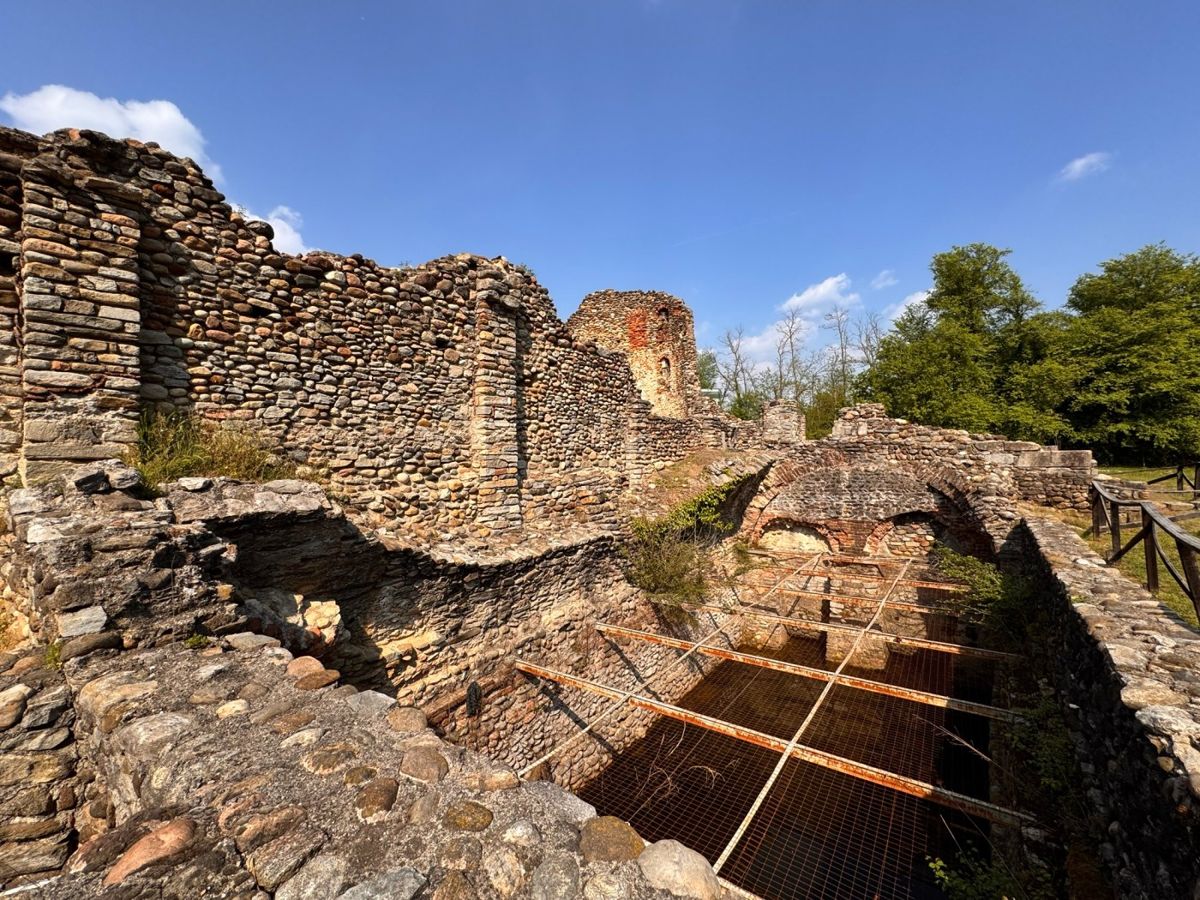
The walls and towers
The perimeter of the castrum, with defensive towers and walls almost 2 m thick, about 900 m long.
The Antiquarium
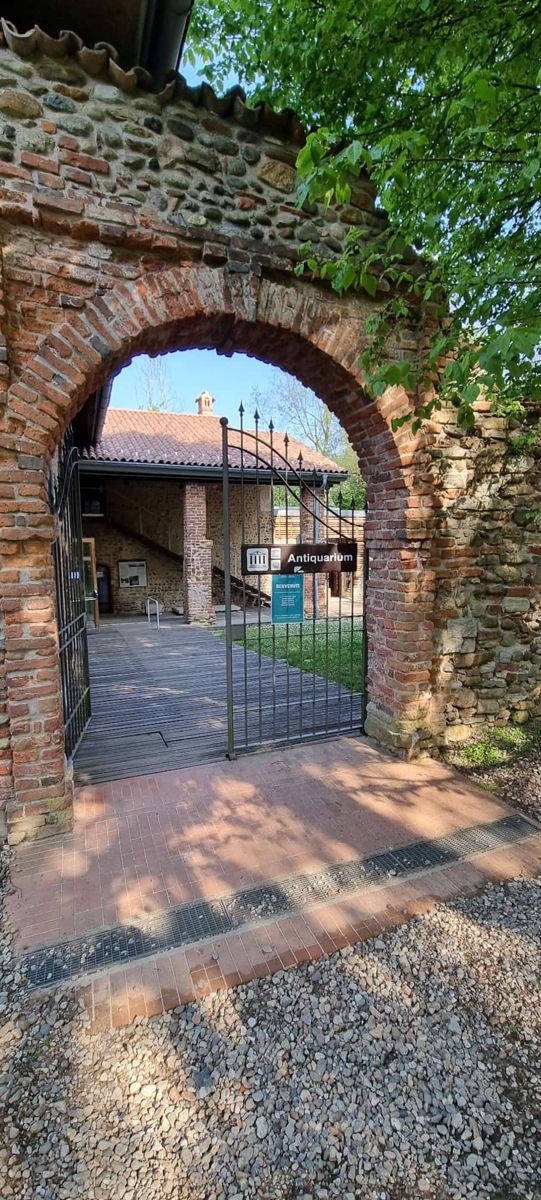
Five exhibition rooms with 3,000 years of material history, from prehistory to the Middle Ages.
Monastery of Torba
On the valley floor, connected to the walls of the castrum. Managed by the FAI, it too is a UNESCO World Heritage Site.
Bibliography
Direzione Regionale Musei Lombardia. 2025. "Parco Archeologico e Antiquarium di Castelseprio." Ministero della Cultura. Accessed 18 aprile 2026. https://museilombardia.cultura.gov.it/musei/parco-archeologico-e-antiquarium-di-castelseprio/
Ministero della Cultura. 2026. "Antiquarium e Parco Archeologico di Castelseprio." Last modified 22 January 2026. Accessed 18 aprile 2026. https://cultura.gov.it/luogo/antiquarium-e-parco-archeologico-di-castelseprio
Fondazione Longobardia. 2025. "Parco Archeologico e Antiquarium di Castelseprio-Torba." Longobardi in Italia. I luoghi del potere (568–774 d.C.). Accessed 18 aprile 2026. https://longobardinitalia.it/scopri/castelseprio-torba/parco-archeologico-e-antiquarium/
Associazione Abbonamento Musei. 2026. "Parco Archeologico e Antiquarium di Castelseprio." Last modified January 2026. Accessed 18 aprile 2026. https://abbonamentomusei.it/spazio_espositivo/parco-archeologico-e-antiquarium-di-castelseprio/
Varese Turismo. 2026. "Parco Archeologico di Castelseprio — Chiesa di Santa Maria foris portas." Accessed 18 aprile 2026. https://www.vareseturismo.it/blog/parco-archeologico-di-castelseprio-chiesa-di-santa-maria-foris-porta-santa-maria-assunta
Wikipedia. 2025. "Parco Archeologico di Castelseprio." Wikipedia, L'enciclopedia libera. Last modified 26 December 2025. Accessed 18 aprile 2026. https://it.wikipedia.org/wiki/Parco_archeologico_di_Castelseprio
Originally published in Italian on the Montezaga blog (montezaga.wordpress.com) →