The Abbey of Novalesa: a thousand-year-old spiritual and cultural centre in the Susa Valley
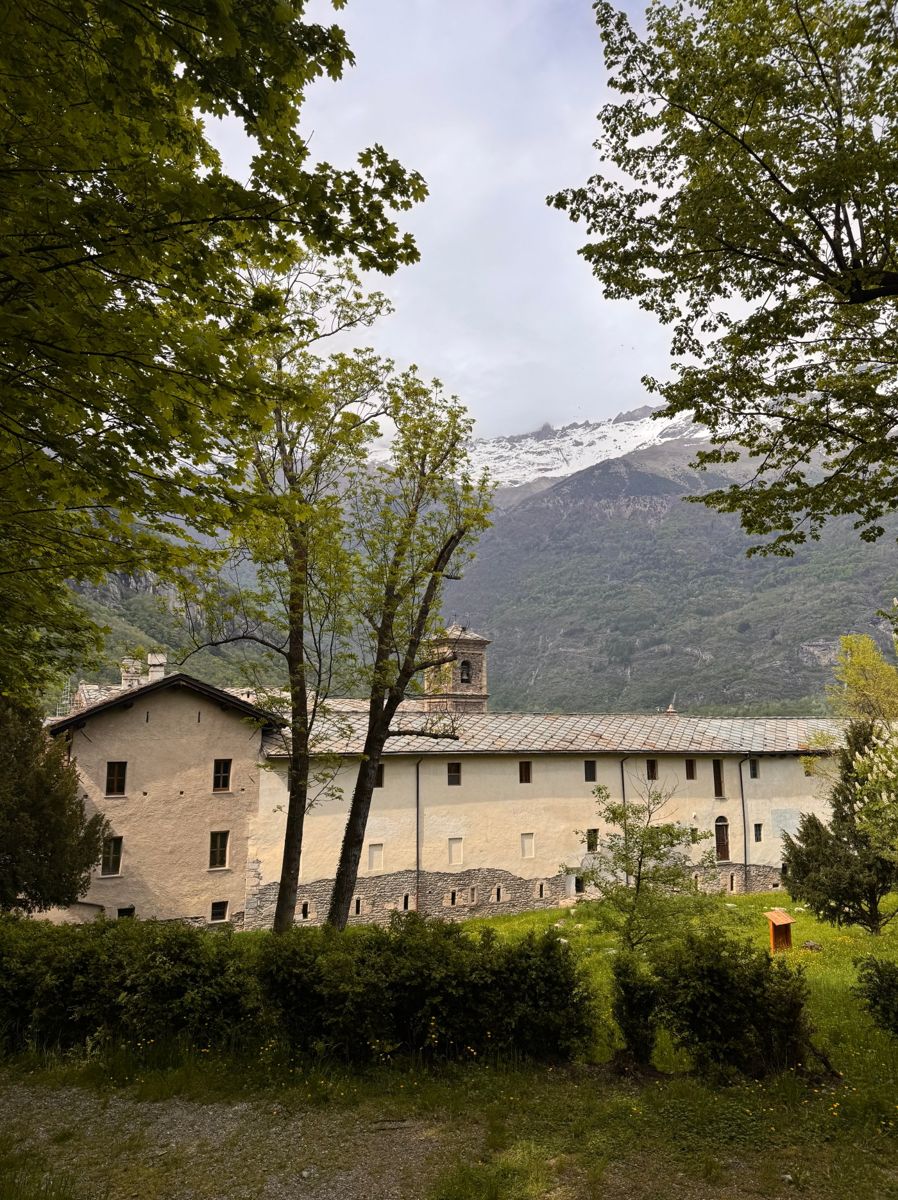
The Abbey of Saints Peter and Andrew at Novalesa, strategically placed at the entrance to the Val Cenischia, is one of the most significant monuments of medieval monastic architecture in Piedmont and an extraordinary witness to the religious, cultural and political history of Western Europe.
Carolingian origins and the golden age
Founded in AD 726 by the Frankish patrician Abbo, governor of the Maurienne and the Susa Valley, the abbey arose at a key point on the Via Francigena, at the foot of the Mont Cenis, the main Alpine pass in the Middle Ages. Its position met a twofold need, spiritual and strategic. The monastery quickly became a centre of power and culture, especially in the Carolingian period when, under the protection of Charlemagne, it enjoyed its first golden age.
In the 9th century the abbey had more than one hundred and twenty monks and owned extensive landed estates in Italy and France. The monastery was particularly renowned for its scriptorium, where monks copied and preserved manuscripts of inestimable value. In this period the abbey became a true cultural beacon, contributing to the so-called "Carolingian Renaissance".
Decline and rebirths
The history of the abbey has had its ups and downs. In 906 it suffered a devastating Saracen raid, which forced the monks to flee to Turin and Breme. Only a century later, thanks to Abbot Gezo of Breme, was the abbey rebuilt and repopulated.
Over the following centuries the monastery alternated periods of splendour with phases of decline. Particularly significant was its transfer in 1646 to the Reformed Cistercian Congregation of Saint Bernard, which gave new impetus to monastic life and launched major renovations in the Baroque style.
The Napoleonic suppression of 1802 marked a further break in the life of the abbey, which was sold to private owners and used for farming. Only in 1973, with the arrival of a community of Benedictine monks, did the monastic complex resume its original function.
The architectural and artistic complex
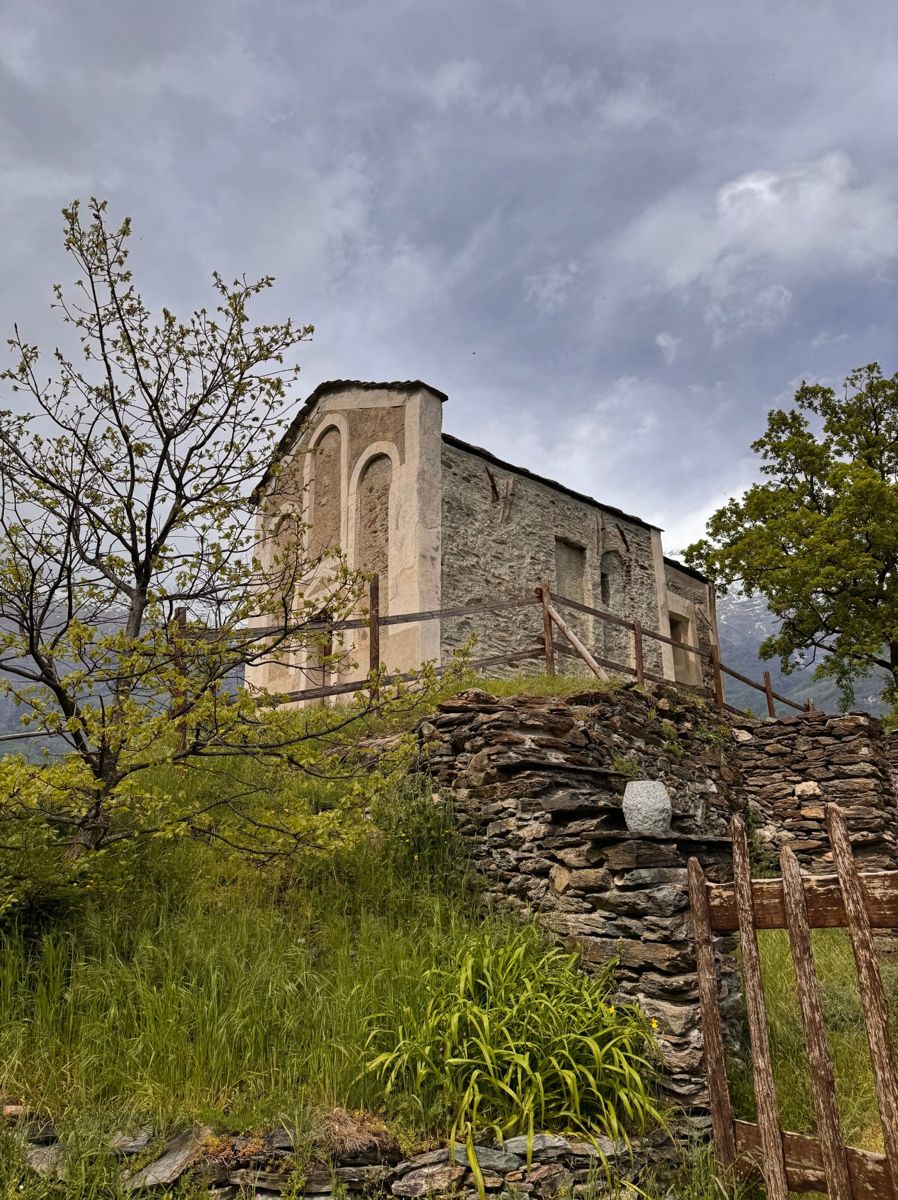
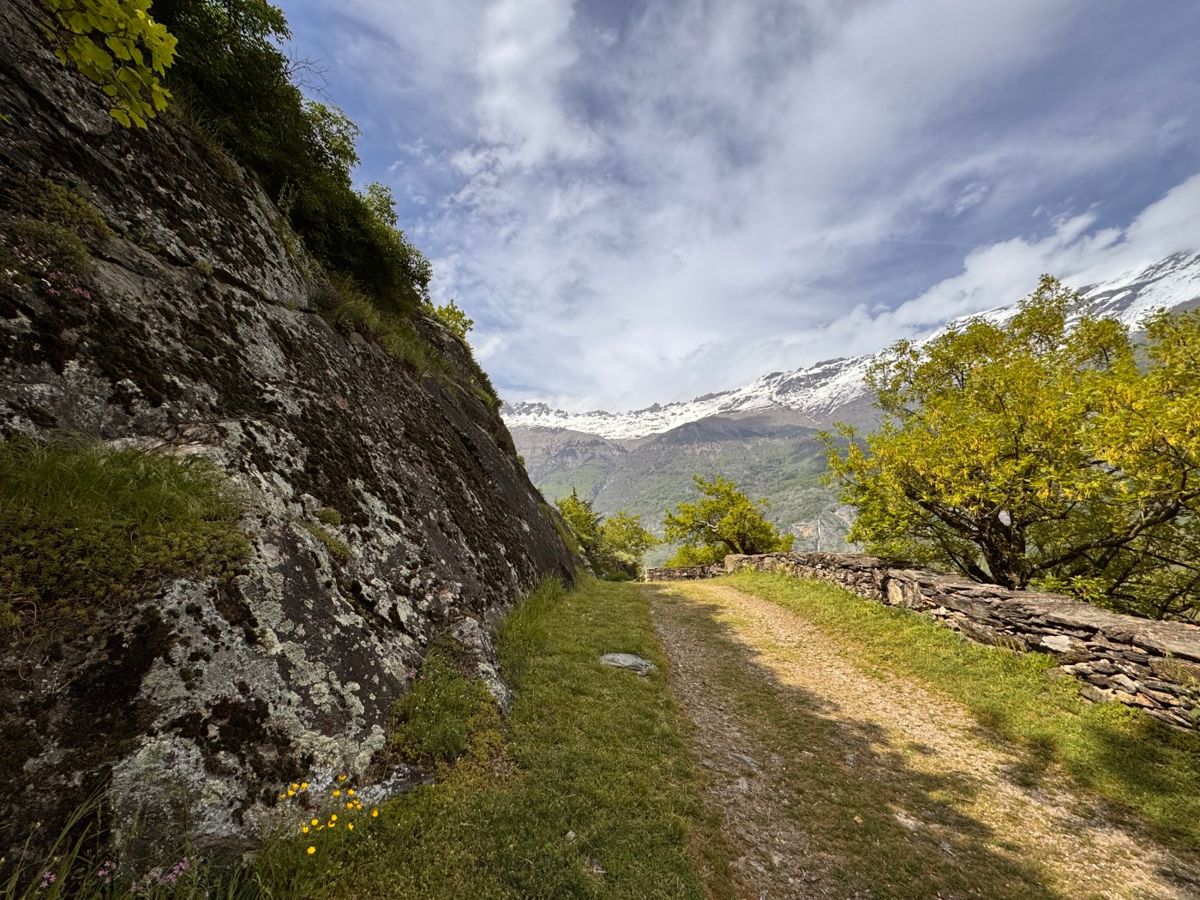
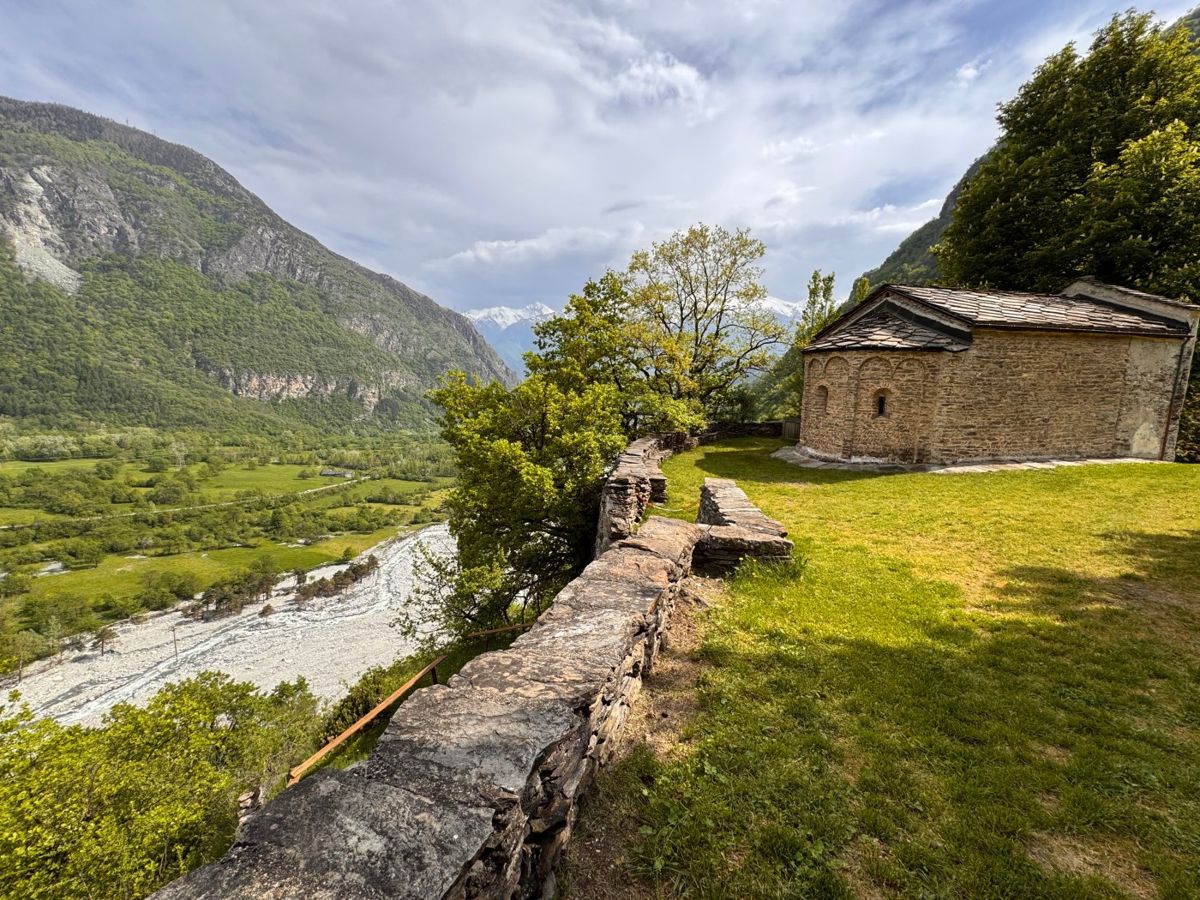
The present abbey complex displays a layering of styles reflecting its different building phases. The abbey church, rebuilt in the Romanesque period and later altered, still preserves elements of the original structure. Of particular interest are the four outlying chapels dedicated to San Michele, San Salvatore, Santa Maria and Sant'Eldrado, rare examples of Carolingian architecture in Italy.
The medieval frescoes decorating the chapels are one of the most significant painted cycles of early medieval art in Piedmont. Especially important is the cycle in the Chapel of Sant'Eldrado, with scenes from the life of the holy abbot who led the monastery in the 9th century.
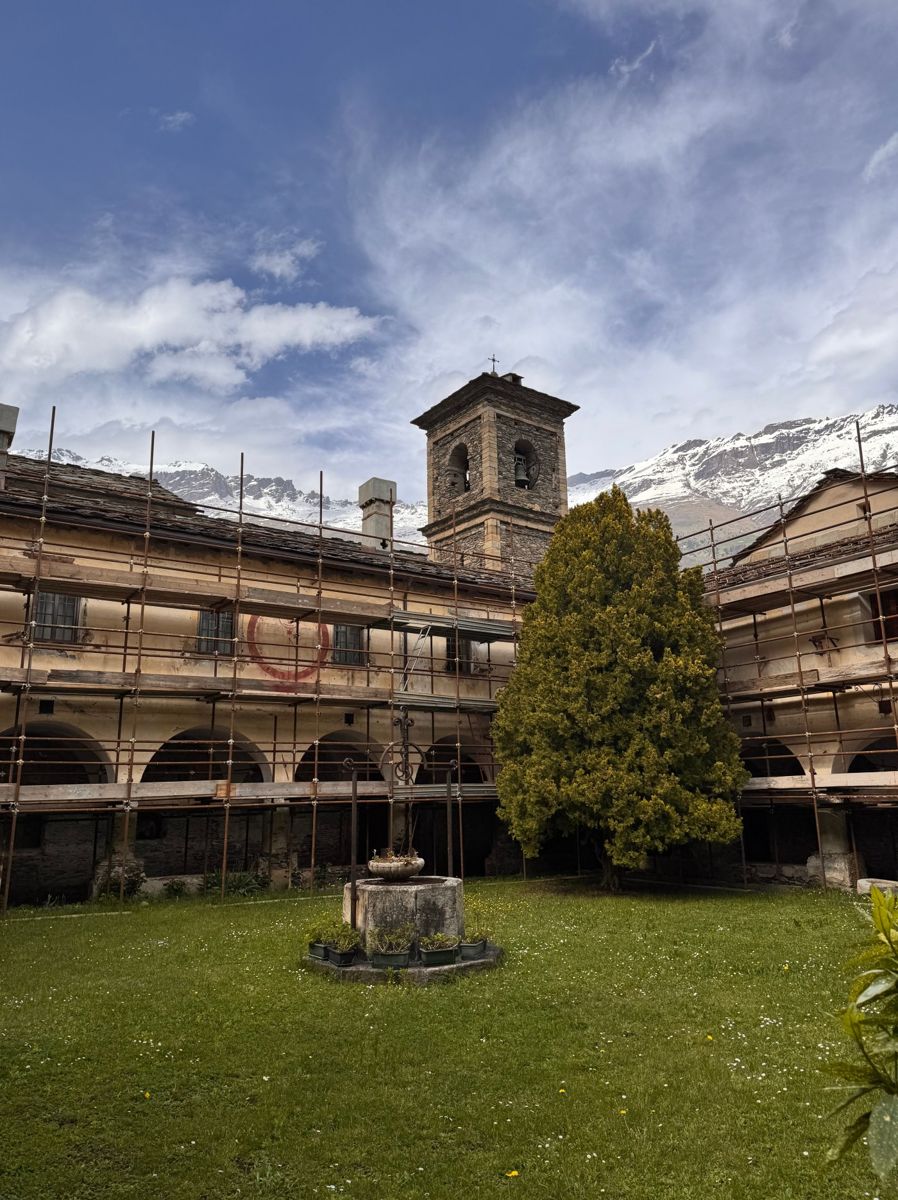
The cloister, rebuilt in modern times, is now a harmonious space linking the various monastic rooms. The library, reassembled after the Napoleonic dispersals, holds an important collection of books today.
Cultural heritage and historical research
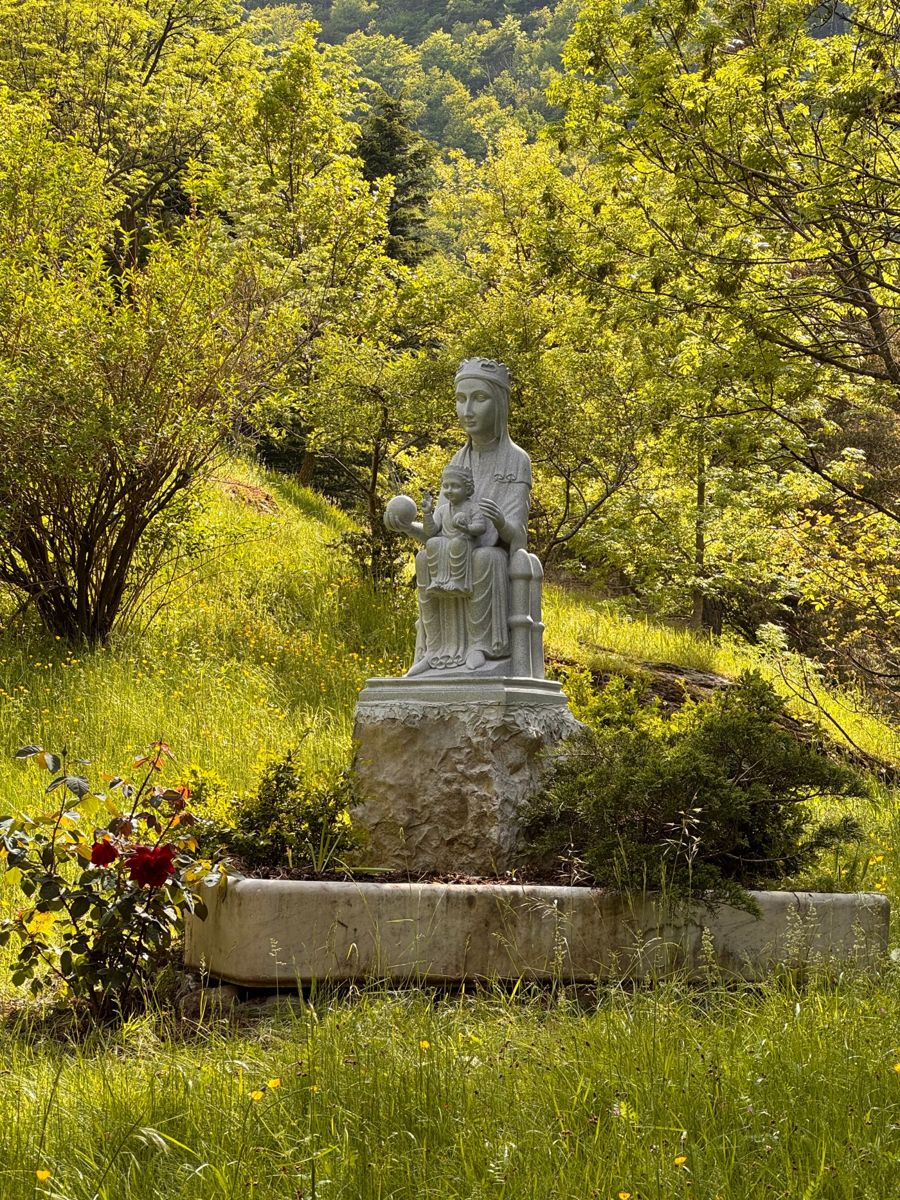
Today the Abbey of Novalesa is an important centre of historical and archaeological research. Excavations carried out in the 20th century uncovered finds documenting not only the medieval phase of the monastery but also the presence of Roman and pre-Roman settlements in the area.
The ancient book restoration workshop inside the abbey carries out important work conserving and studying manuscripts and historical documents, ideally continuing the old tradition of the medieval scriptorium.
Conclusions
The Abbey of Novalesa is a cultural treasure of exceptional value, in which spiritual, architectural and historical dimensions intertwine. Its thousand-year presence bears witness to the fundamental role of Benedictine monasteries in shaping European cultural identity and in transmitting knowledge through the centuries.
As a still active centre of spirituality and a place of culture open to scholars and visitors, the abbey continues to fulfil its twofold function: to guard the memory of the past and keep it alive in the present, in a constant dialogue between tradition and the contemporary world.
Bibliography
Cantino Wataghin, G. (2000). L'abbazia dei Santi Pietro e Andrea di Novalesa: il contributo delle indagini archeologiche al recupero della sua memoria. Segusium, 37, 27-44.
Crosetto, A. (2018). Le cappelle di Novalesa. Archeologia di un paesaggio monastico. All'Insegna del Giglio, Florence.
Dell'Aquila, F., & Fonseca, C.D. (2016). Storia dell'architettura monastica in Italia. Jaca Book, Milan.
Focardi, G. (2005). L'abbazia dei Santi Pietro e Andrea di Novalesa nell'alto Medioevo (726-906). Edizioni del Graffio, Borgone di Susa.
Frati, M. (2006). Gli edifici monastici della val di Susa: l'abbazia di Novalesa. Quaderni della Soprintendenza per i Beni Architettonici e Paesaggistici del Piemonte, Turin.
Mola di Nomaglio, G. (2008). La Valle di Susa nella storia dell'Europa: l'abbazia di Novalesa. Centro Studi Piemontesi, Turin.
Patria, L. (2012). Novalesa, un'abbazia e la sua terra. Edizioni del Graffio, Borgone di Susa.
Penco, G. (2002). Storia del monachesimo in Italia: dalle origini alla fine del Medioevo. Jaca Book, Milan.
Sergi, G. (2001). Monasteri e cavalieri alle porte del valico: il caso di Novalesa. In Sergi, G. (ed.), Esperienze monastiche nella Val di Susa medievale, Scriptorium, Turin, pp. 15-28.
Tosco, C. (2014). L'architettura medievale in Italia: 600-1200. Il Mulino, Bologna. Deputazione Subalpina di Storia Patria, Turin.
Originally published in Italian on the Montezaga blog (montezaga.wordpress.com) →